Kalawan Monastery, Taxila: Buddhist Ruins and Visitor Guide
Stay Curious
Discover new places, ideas and stories from How 2 Have Fun — delivered occasionally to your inbox.
Subscribe →
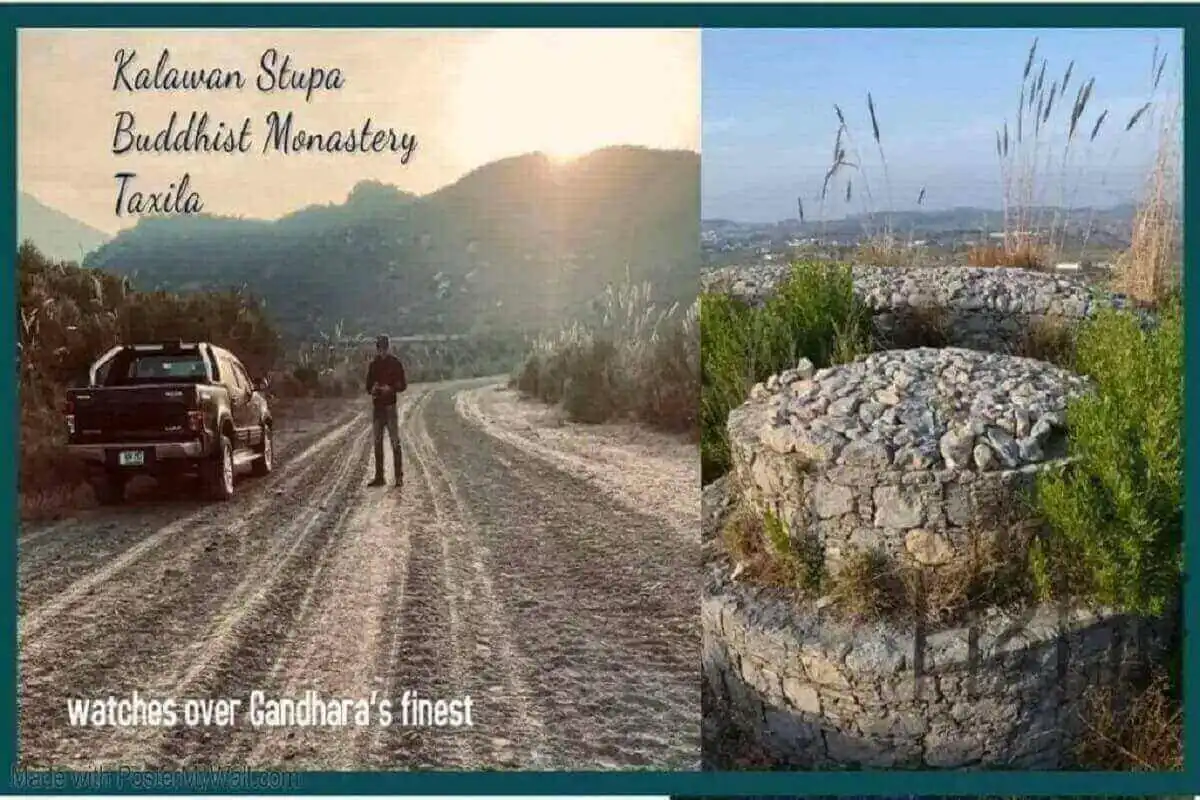
Hidden in the hills south of Taxila, Kalawan is an extensive Buddhist archaeological complex containing the remains of monasteries, stupas, shrines and residential spaces. Its isolated location and overgrown paths make it considerably less accessible than Taxila’s better-known sites.
UNESCO identifies Kalawan as one of the component groups belonging to the Taxila World Heritage Site. Its ruins form part of the wider Buddhist landscape that once made the Taxila Valley an important centre of religious life, learning and pilgrimage.
I visited Kalawan for its archaeology as well as its elevated views over the surrounding hills and plains. The journey, however, required careful navigation because signs and visitor facilities were limited.
Table of Contents
ToggleKalawan differs from Taxila’s more frequently visited monasteries because its remains are spread across a relatively remote hillside. The complex incorporates devotional spaces—including stupas and shrines—alongside rooms associated with monastic life.
Kalawan is not a separate UNESCO World Heritage Site. It is one of the archaeological components collectively inscribed as Taxila in 1980. UNESCO officially identifies it as the “Kalawan group of buildings.”
Kalawan forms part of a network of settlements, stupas and monasteries distributed across the Taxila Valley. The nearby Dharmarajika Stupa provides an especially useful comparison because both complexes combine religious monuments with spaces associated with monastic communities.
Other important places within the wider landscape include the ancient city of Sirkap, the monastery at Mohra Moradu and the better-preserved ruins of Jaulian.
The only problem is that it is hard to find and there is nothing to eat or drink there.
Google maps do not show the site, so follow this map.
Kalawan developed as a Buddhist religious and residential complex within the ancient cultural landscape of Taxila. Archaeological remains indicate that monks lived at the site while its stupas and shrines provided spaces for worship and the enshrinement of relics.
One of Kalawan’s most important discoveries was a copper-plate inscription recording the dedication of relics to the Sarvastivada Buddhist school. The inscription carries a date expressed in an ancient era; scholars have proposed approximately 77–78 CE, although the conversion is not entirely certain.
This inscription is valuable because it connects Kalawan with an identifiable Buddhist community rather than leaving the ruins as anonymous buildings.
Kalawan’s surviving remains occupy more than one level of the hillside. During my visit, reaching the higher area required another climb from the lower ruins.
Vegetation can obscure walls, paths and architectural details. The visible remains include stone foundations, monastic rooms and structures associated with Buddhist worship. Without an archaeological plan or guide, some features may be difficult for an ordinary visitor to identify.
Visitors should not push through dense undergrowth or enter concealed spaces. Uneven ground, thorns and wildlife can make unexplored sections unsafe.
Kalawan lies beyond the principal visitor circuit around Taxila Museum. During my visit, I travelled from Taxila Museum towards Shahpur and Karamwal village before following a smaller road near an irrigation channel.
The final entrance and walking track were poorly marked. Because roads, tracks and access arrangements can change, confirm the present route with the Taxila Museum or local archaeology authorities before leaving the main road. Do not depend solely upon an old map or directions from a previous visit.
The approach may become muddy after rain and may be unsuitable for an ordinary car. Avoid attempting it in wet weather, travel during daylight and do not enter private land without permission.
The best time to visit Kalawan is in the winters when it is cool and enjoyable to hike to the top.
Wear hiking shoes, full-length trousers and clothing that can withstand thorny vegetation. Carry drinking water, food, sun protection and a charged phone because no dependable visitor facilities should be expected at the site.
Do not visit alone. Tell someone where you are going and turn back if the track becomes unclear or overgrown. The condition of the road and walking trail should be confirmed locally before every visit.
Kalawan’s greatest attraction is its combination of archaeology, solitude and landscape. Unlike the more developed sites near Taxila Museum, the ruins retain a strong sense of isolation.
Travellers who appreciate secluded heritage sites may also enjoy the Giri archaeological complex, where Buddhist monastic remains occupy another quiet hillside setting.
Kalawan is worthwhile for travellers with a serious interest in Buddhist archaeology and the wider history of Taxila. Its ruins are less immediately understandable than those at Jaulian or Mohra Moradu, but the site offers a valuable picture of how monastic establishments extended into the hills surrounding the ancient city.
This is not presently a casual roadside attraction. Limited signs, rough access and dense vegetation require preparation and responsible behaviour. Visit with companions or a knowledgeable guide, respect nearby residents and farmland, and leave every archaeological feature undisturbed.
Discover new places, ideas and stories from How 2 Have Fun — delivered occasionally to your inbox.
Subscribe →