Sirkap, Taxila: Ancient City, Buddhist Stupas and Visitor Guide
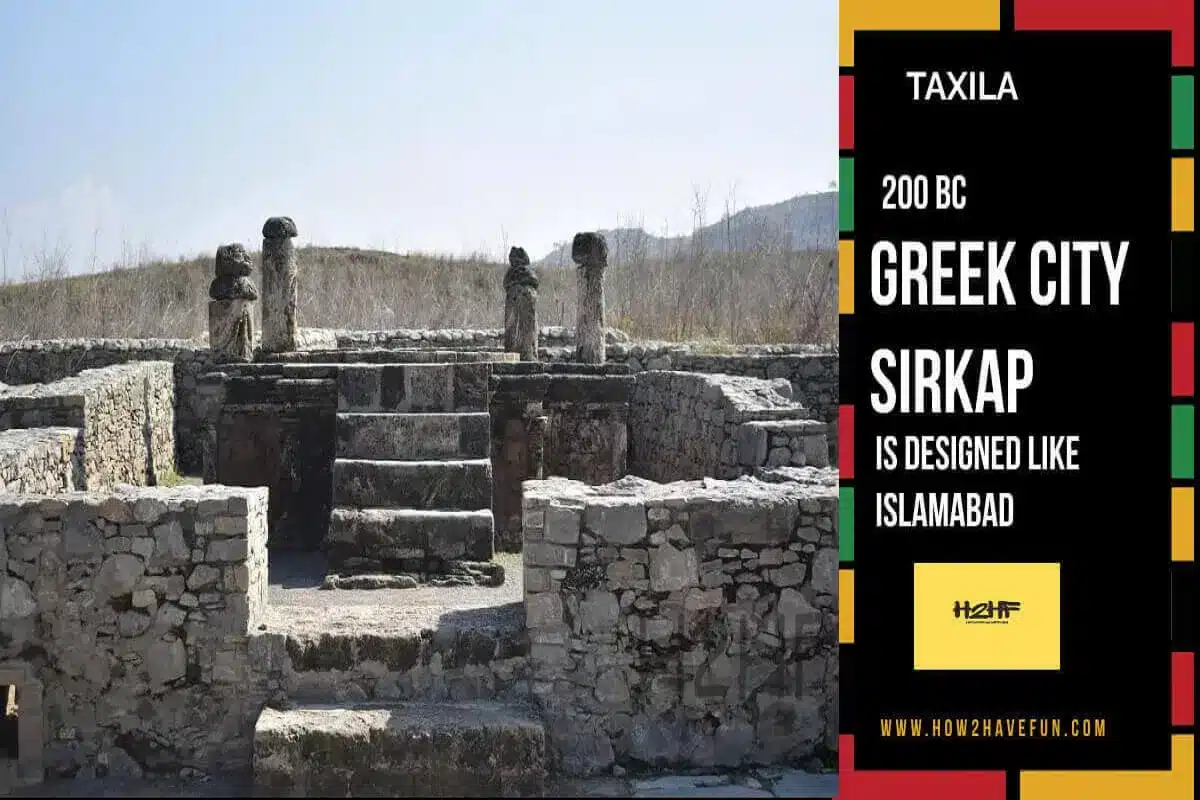
Sirkap is an ancient fortified city within the archaeological landscape of Taxila. Founded during the second century BCE, its straight main street and grid of side streets reflect Hellenistic town planning, while its religious monuments reveal the region’s diverse cultural influences.
Walking through the ruins, I was struck by how clearly the streets, houses and sacred spaces remain visible. Sirkap offers a different experience from Taxila’s hilltop monasteries: here, visitors can explore the layout of an entire ancient city.
Sirkap forms part of the Taxila UNESCO World Heritage property, which includes ancient settlements, monasteries and stupas.
.jpg)
Taxila city, has been mentioned by Greek philosopher Apollonius of Tyana of the 1st Century AD as resembling Athens and Nineveh (a Greek colony in present-day Iraq).

.jpg)
Even a Chinese traveler of early times talked of this city being strategically located at the crossroads of trade between India, China, Central Asia, and Persia.
.jpg)
Following Alexander’s (The son of Zeus’s) footsteps, Demetrius sacked the town again in 180 BC and laid the foundation of SirKap city.
.jpg)
Demetrius styled the city in Athens.
The Greeks took over Asoka’s Buddhist Kingdom and melded into it.
.jpeg)
Indo-Greek Menander in 130 BC increased various sectors of SirKap. A Greek-styled temple (Jandial) was built outside the 30-foot walls of SirKap, complete with its front Columns. Inside the walled city were syncretic temples of Jain, Sun worshipers, Hindus, and Buddhists.
.jpg)

There was Persian Gondophares’s double-headed eagle temple and a huge sundial. The King had his royal court at the opposite end of the main boulevard.
.jpg)
The city had its water channels, drainage, wells, marketplace, barracks’, and residential colonies.
.jpeg)
One illegal excavator approached me with coins of the Kushan period and said that very recently bronze statues and utensils were dug out by locals. The private archeological collection of locals is a lot more valuable than what is in the Taxila Government Museum.

SirKap was destroyed by a great earthquake in the 40 AD and then taken over by the mysterious ‘European looking’ central Asian Kushan’ (Yuezhi)

A rival city, SirSukh was built a few kilometers away by the Kushan. SirSukh has yet to be completely excavated.
.jpg)

Buddhist monasteries like Jaulian, Maura Muradu, Badalpur, etc. dotted the higher grounds around SirKap
The city was probably abandoned in the White Hun’s invasion of the 5th century BC.jpeg)

Standing in the middle of the sundial of SirKap, it made perfect sense to me that Demetrius located this modern city on higher ground protected by the Indus & Jehlum Rivers on both flanks and by mountains from the North.

.jpg)
Sirkap reveals the urban side of ancient Taxila. To understand its Buddhist religious life, continue to Jaulian Monastery, Mohra Moradu’s stupa and monastery , Bhamala Stupa and Dharmarajika Stupa.
Discover new places, ideas and stories from How 2 Have Fun — delivered occasionally to your inbox.
Subscribe →