Dharmarajika Stupa, Taxila: Buddhist Heritage and Archaeological Ruins
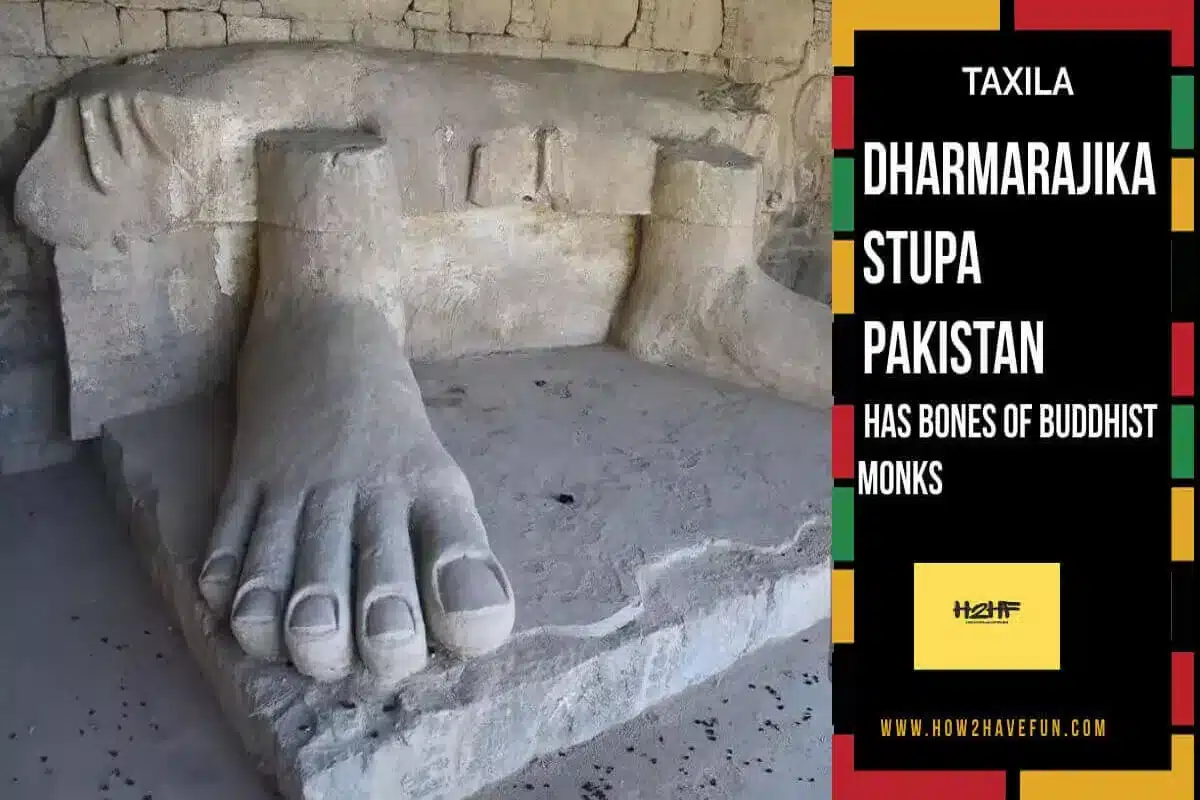
Dharmarajika Stupa is one of the major Buddhist archaeological complexes in the Taxila landscape. Its central stupa, smaller religious monuments and surrounding monastic remains preserve evidence of Gandhara’s Buddhist heritage.
The site offers a different experience from Jaulian’s hilltop monastery and the streets of Sirkap’s ancient city. Together, these places help visitors understand the religious and urban life of ancient Taxila.
Dharmarajika is included in the Taxila UNESCO World Heritage property.
.jpg)
Dharmarajika developed through successive periods of construction and enlargement. Its origins are traditionally associated with Emperor Ashoka, while the surviving remains reflect later additions and changes.
.jpg)
Coins, inscriptions and excavated structures help archaeologists reconstruct the complex’s history. However, finding a ruler’s coin does not, by itself, prove that the ruler personally funded a building.
.jpeg) The causes and chronology of the site’s decline require careful archaeological interpretation. They should not be reduced to an unsupported account of a particular ruler killing its monks.
The causes and chronology of the site’s decline require careful archaeological interpretation. They should not be reduced to an unsupported account of a particular ruler killing its monks.
.jpg)
The place is called ChirTope (slashed top) by locals referring to the tunnel dug by robbers to recover Buddha’s relics.
The Pakistani archeologists found Buddha’s teeth from the site which is still one of the holiest relics of the Mahayana (larger) Buddhist sect, in the world.
.jpeg)
Even now Buddhists from China, SriLanka, Thailand, visit Dharmarajika Stupa to pay their respects to the soul of the founding monks of Buddhism
.jpg)
One relic’s robber showed me a foot long tablet with symbols I couldn’t make out along with various gems stones that the devotees wore while performing rituals.
.jpeg)
There were incense trees here that are nowhere to be found in this land that filled the air with the most delightful scent possible.
.jpg)

What to see at Dharmarajika
Visitors can explore the remains of the main stupa, surrounding smaller stupas and shrines, and areas associated with the monastery. These structures show how worship and community life developed around a major Buddhist monument.
For comparison, visit Mohra Moradu’s stupa and monastery, another important religious complex in the Taxila landscape.
.jpg)

One Gold coin from a close by archeological site fetched 2 crore rupees in the black market recently. Thanks Dad for forcing me to study engineering — I haven’t seen a fraction of the millions you promised are coming my way.
.jpg)

Continue exploring the surrounding region with Bhamala Stupa near Khanpur, or discover more destinations through our Explore Pakistan guide.
Discover new places, ideas and stories from How 2 Have Fun — delivered occasionally to your inbox.
Subscribe →