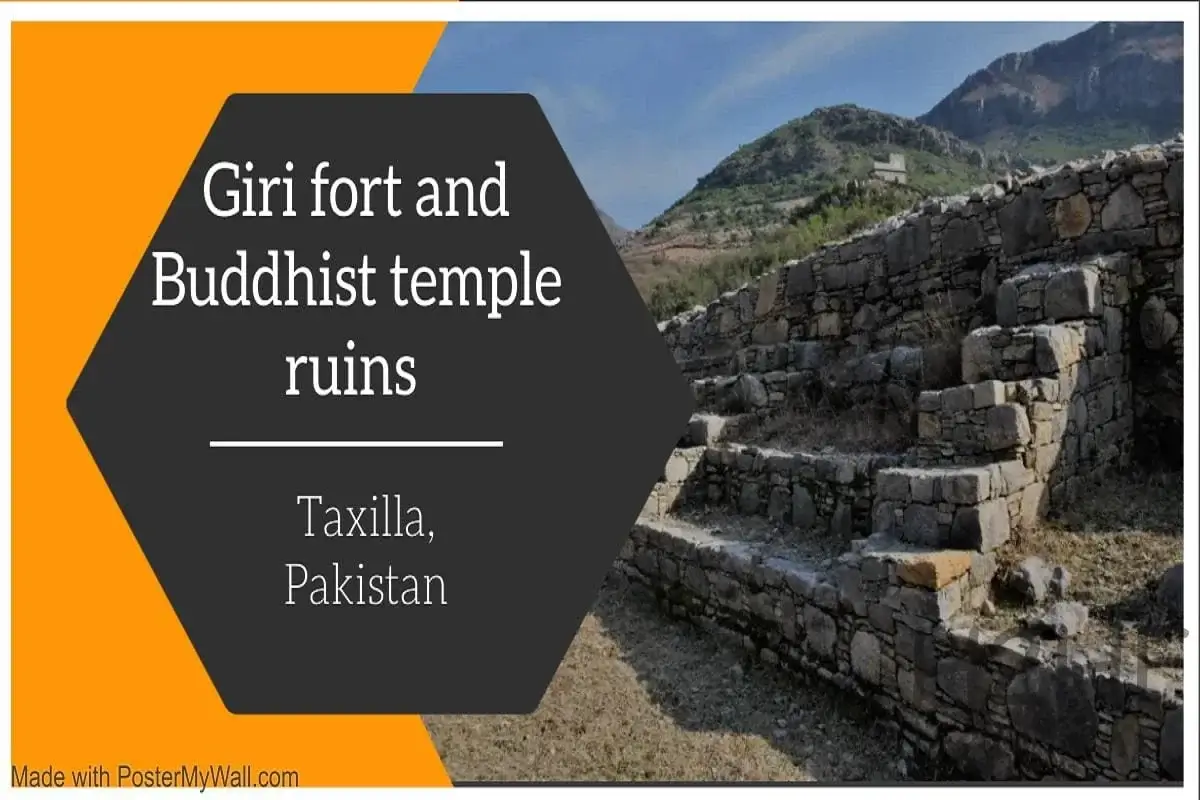
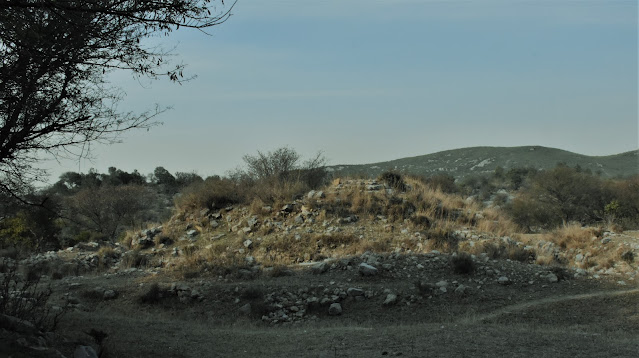
Giri fort and Buddhist temple ruins of Taxila Pakistan
Stay Curious
Discover new places, ideas and stories from How 2 Have Fun — delivered occasionally to your inbox.
Subscribe →
Giri fort and Buddhist temple are nestled in the reverse face of the Margalla hills just across from Ban Faqiran Stupa in Islamabad.
Table of Contents
ToggleThis Giri fort and Buddhist temple were erected by Buddhist zealots of the lake Kushan period of Gandhara civilization of the 1st – 5th century, from Asoka’s successors.
This holy site luckily survived the marauding crowd of Hun temple destroyers in the 5th century.
Also see,
Giri means “Burden of obligation” in Japanese and is now part of the Japanese culture as a “burden of obligation to serve superiors.” The word Giri has its origins in Buddhism that originated in Pakistan and here in Taxila.
It is because of this link that the Japanese Buddhist sangha has been restoring ruined temple sites all across India and Sri Lanka.
Pakistan has yet to invite them to restore these beautiful temple sites for reasons only known to the brilliant minds that rule us.
To drive to the site, you must take right in front of the Taxila museum and then follow the signboards.
The last twenty minutes are on a dried-up rivulet bed and require guts of steel to navigate.
PRO-TIP
Avoid going to the site when it is raining because the stream becomes a torrent.
There are no restaurants of quality at the Giri Taxila site so take your food with you.
The only Ok, restaurant at Taxila, is in front of the museum and that too has average food.
Might as well eat from the roadside driver hotel on the GT road instead.
It took me 2 hours to get to the Giri fort and Buddhist temple ruins because I had tried to get to the Kunala stupa site first.
Kunala temple site requires a hike of about half-hour to get there and I didn’t have my dagger with me.
Giri Fort and Buddhist temple ruins have a great history. Masud, Mahmood Ghaznavi’s errant son was assassinated here by his nephew, Ahmad (son of Muhammad). Like all power-hungry Mughal, there was intense fighting for the throne amongst his successors.
Giri site was still intact in 1040 when Masud was overthrown, incarcerated, and killed here.
Right now, there are only remnants of
The shrines were erected sometime later.
The local heavyweight family of the area is Piracha, indicating they also are Hindu converts that stayed back to look after the religious sites.
The drive through the loquat fruit farm was delightful and then a bifurcation appears. One leads to one monastery complex and the other branch to the other on a higher plateau.
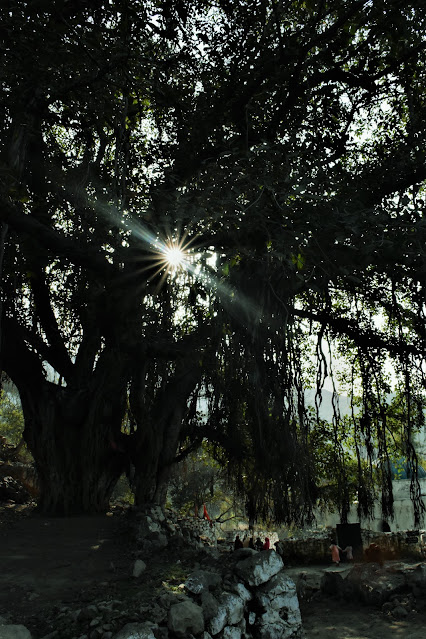
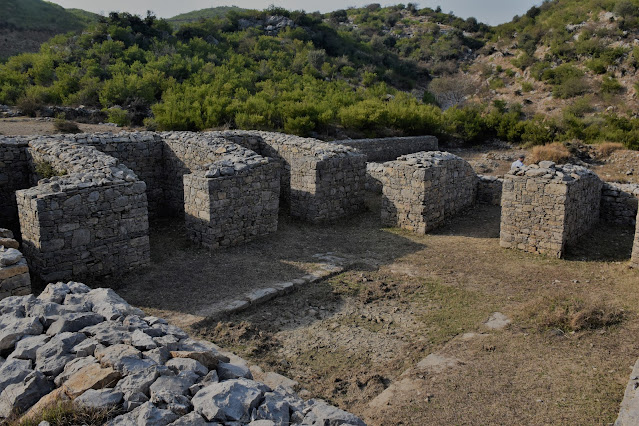
The monastery walls, the lotus ablution pond, and dormitories have been excavated and restored somewhat but the stupa is mostly destroyed and has not been excavated yet.
The whole site has been encroached on by shrines and landowners.
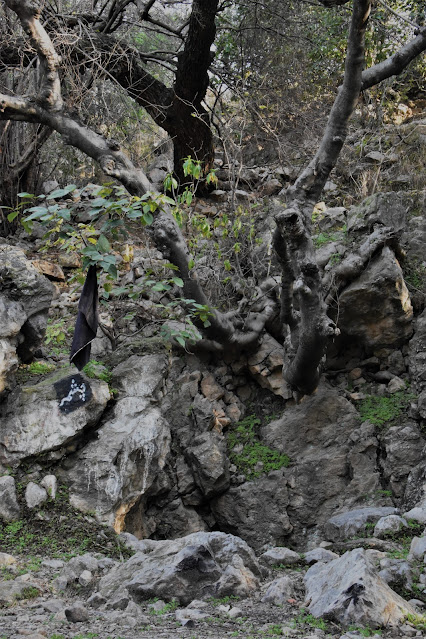
Walking back to site number two, I saw a natural freshwater stream pouring into a crystal clear pond, which had religious value for the devotees back in the day. There is even a hole carved into the rock wall through which you can see water gushing forth.
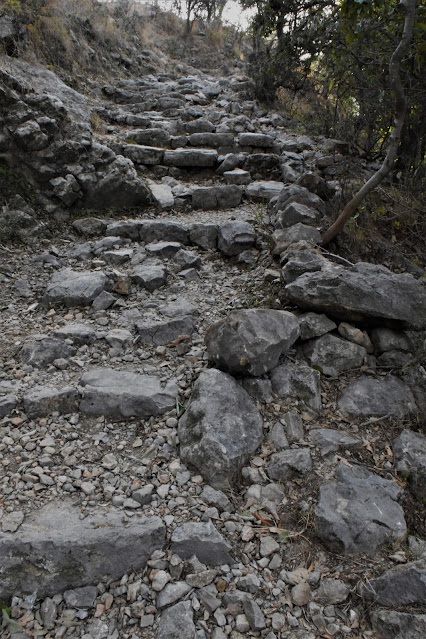
Walking through the descript shrine, you will have to climb about 50 flights of stone stairs to reach the Giri fort and Buddhist temple ruins number two.
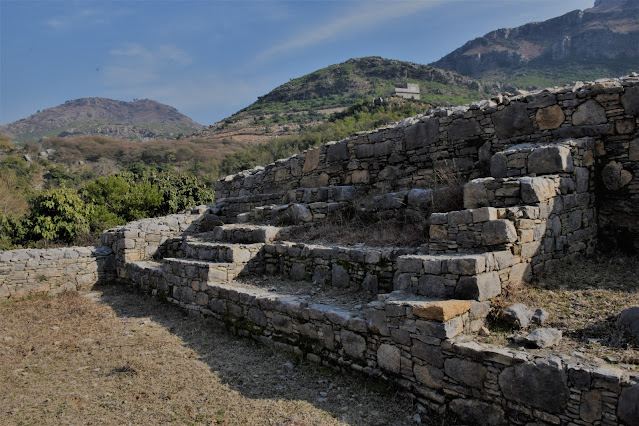
Like site number one, this place has been somewhat restored with the building material that was still available not used to construct abutments for the fruit farms close.
The stupa is destroyed and not much is left to excavate.
The view from this site is pleasant the atmosphere is peaceful.
The best time to visit Giri fort and Buddhist temple is during springtime and early summers as it gets scalding in June, July.
You can take a motorcycle, a 4×4, or hike to the Giri fort and Buddhist temple ruins site, but not a car.
Giri fort and temple is a nice place for a picnic and relaxing on a warm winter day and soaking in the reverent atmosphere. And if you are lucky you can eat fresh loquat from the trees.
I couldn’t make out the track toward Ban faqiran stupa and down into Shah Allah Ditta, but trust me, it’s there.
If anyone wants to join me on the Kunala Stupa trek, do inbox me.
Discover new places, ideas and stories from How 2 Have Fun — delivered occasionally to your inbox.
Subscribe →