Bhamala Stupa, Khanpur: Buddhist Ruins and Reclining Buddha
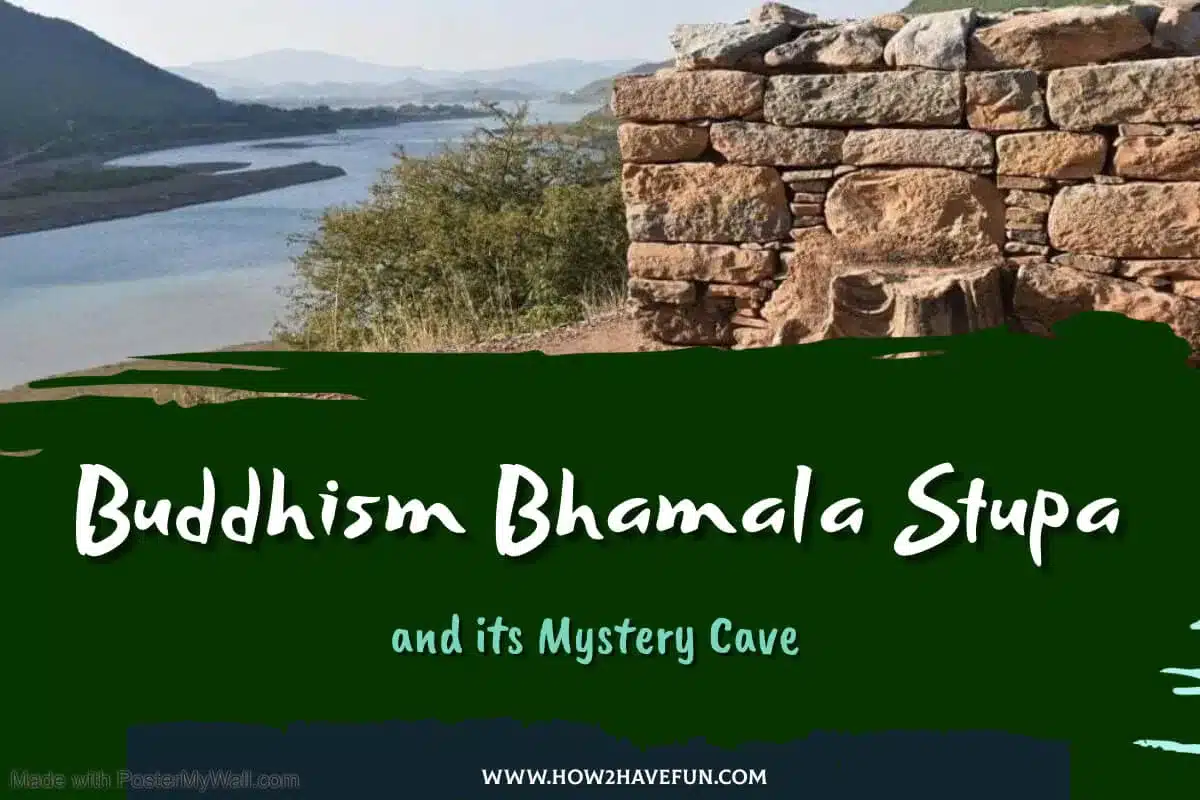
Bhamala Buddhist Complex stands beside the Haro River near Khanpur in Haripur District, Khyber Pakhtunkhwa. Its distinctive cruciform stupa and excavated reclining Buddha make it an important stop for visitors interested in Gandhara’s Buddhist heritage.
We visited Bhamala after travelling through the Khanpur area. The riverside setting and surrounding hills made the journey memorable, offering a different experience from Jaulian Monastery near Taxila.
Unique Cruciform Stupa
Unlike regular hemispherical stupas, the Bhamala Stupa stands out with its distinctive cruciform design, which resemble South American ancient pyramids.
.JPG)
Buddhist Relics at Bhamala Stupa
Excavations at Bhamala Stupa have revealed relics, such as:-
- Sculptures
- Pottery pieces
- Coins
- Necklace pieces
The Mahaparinirvana Statue (Sleeping Buddha)
Here the most intriguing relic is the statue of the lying Buddha, which symbolizes the Final Days of Buddha on Earth. Called the Mahaparinirvana Statue, this 48 ft. remarkable statue is one of its kind in the world. This could also be the world’s oldest statue ever created and is considered a masterpiece of Gandhara sculptures.
The Statue is still in disrepair, but it is visible enough to allow archeologists and artisans to recreate it.
Bhamala Stupa UNESCO World Heritage Site
Recognized as a World Heritage Site by UNESCO, excavation began in 1929 by Sir Sufiyan Malik and Sir John Marshall and continued until the early 1930s. The work again resumed in 2017 at the Bhamala Stupa site in Taxila Valley.
Historical Relevance and References
Bhamala Stupa has been documented notably by Chinese Buddhist traveler Xuanzang from the 7th century CE in his report about it in decay but highlighting its impressive size as well as numerous Buddhist sculptures within.
A nearby cave: my visit and its uncertain history
After exploring Bhamala, I accompanied a local guide to a deep, shaft-like opening in the surrounding hills. Its proximity to the archaeological complex made me curious, but I found no reliable evidence establishing its age, purpose or connection with Buddhist monks.

Stories about treasure hunters and its unexplored depth belong to local oral tradition, not verified archaeological history. Visitors should not enter or approach an unprotected shaft without specialist assessment.
Location of Bhamala Stupa Khanpur Dam
.JPG)
We approached Bhamala through the Khanpur area. Visitors interested in combining heritage with a separate lakeside excursion can read our guide to things to do at Khanpur Dam.
During monsoons, Khanpur Lake reaches right up to the foot hills of Bhamala Stupa and monastery and the locals use boats for their daily chores. One un-excavated Buddhist site just below Bhamala is already ruined by the Lake water.
.JPG)
Where to Eat?
We had a tasty breakfast of chai and parathas, before reaching the site, at the Taxila museum site.
.JPG)
Initial Excavation
The initial excavation was done by Sir John Marshal in 1922 and he destroyed the main Stupa mound completely. Present day excavations have revealed a huge double-storeyed monastery with a lotus ablution pond in the center and monk chamber on the sides.
.JPG)
More on Lying Buddha
What’s most interesting is the discovery of a sleeping Buddha statue – probably the longest Maha pari nirvana (death giving freedom from reincarnation) of Lord Buddha, in the region. A smaller sized version of this massive figure is also visible in the votive Stupa behind the larger one.
.JPG)
Several Buddha statues in various poses are also in display there. Recent excavations have revealed copper, metal, statue fragments. I guess artifact thieves have already taken away the gold pieces from the site in the 1700 years since it was first made.
There is an old settlement close to the Bhamala site and I tried to find some unique facial feature in the residents that would point to genetics — something that is remotely Greek or central Asian — couldn’t find anything.
I do see the characteristic hooked nose of the Greek who once ruled here, up north in Kashmir.
.JPG)
Buddhist Monks Still pray at these sites
Several Buddhist monks visit this site for spiritual rejuvenation and link with their ancestors. “We pray here because our ancestors chose this location. If Pakistani people stick to the concept of Dhamma (truth), the peace of this location (Bhamala) will protect Pakistan” is what a venerated Buddhist monk had to say.
 My Trip to Bhamala Stupa and Cave
.JPG) My Trip to Bhamala Stupa and Cave
My Trip to Bhamala Stupa and CaveAfter spending some time at the reclining Buddha site, I took a local guide with me to the rock cave high above in the surrounding hills.
It was a 30 minutes hike from the Haro river floor, but was worth the effort. The cave was more of a well. I threw a large rock inside and it bounced 45 times, after which, I couldn’t hear it bouncing. Once a cow fell into this cave and people had to bring her out in pieces. No one knows who built this cave, but it is too much of a coincidence for it to be located on an ancient pilgrimage route close to a Buddhist meditation site.
One treasure hunter excavated this cave for a whole one year and never told anybody what he found there. I couldn’t find the courage to go down there without proper gear.
Distance from Islamabad
Bhamala Buddhist site is just two hours’ drive from Islamabad / Rawalpindi. It’s a good place to picnic with the family and friends.
There are several Buddhist sites on top of the hills in the surroundings but no one ventures there due to their remoteness.
.JPG)
Bhamala is an archaeological site, not a picnic ground. Avoid climbing on ancient structures, touching fragile remains or leaving litter. Confirm current access arrangements and road conditions before travelling.
Explore more Buddhist heritage
To compare Bhamala with other religious complexes in the region, explore Mohra Moradu’s stupa and monastery and Dharmarajika Stupa in Taxila.
For the urban side of ancient Taxila, visit Sirkap’s streets and religious monuments.
Conclusion
Bhamala Stupa is only for the heritage and history enthusiasts, the adventure seekers can visit Khanpur Dam Water sports close by.

Discover new places, ideas and stories from How 2 Have Fun — delivered occasionally to your inbox.
Subscribe →