Shigar Valley: Fort, Buddhist Heritage and Places to Visit
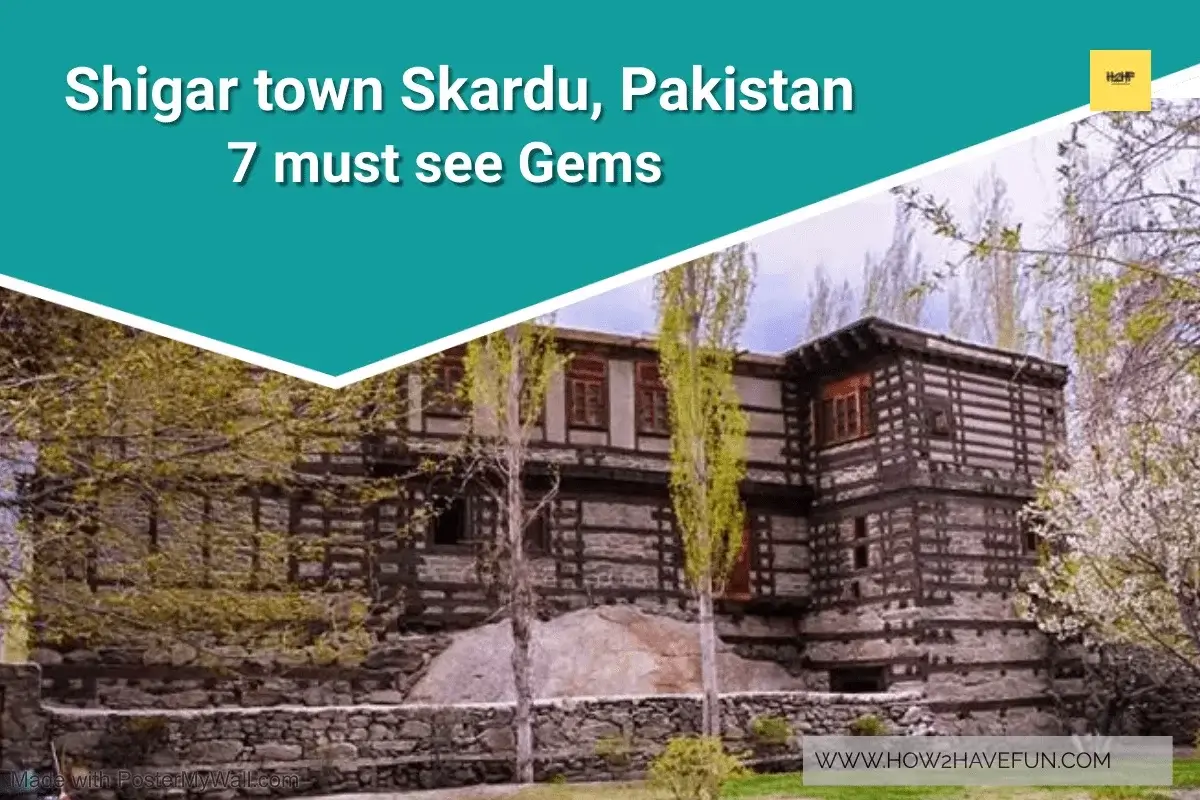
Shigar Valley is the gateway from Skardu towards Askole and the great Karakoram peaks, but it deserves more than a hurried stop on the way to K2.
The valley combines desert landscapes, traditional wooden architecture, historic mosques, the restored Shigar Fort Palace and important Buddhist archaeological remains. During my visit, its combination of history, mountains and cultivated villages made Shigar feel very different from Skardu.
This guide covers the principal places to visit in Shigar, along with the route, heritage sites and practical information needed to plan a responsible visit.
History of Shigar
Shigar town was once a kingdom of Amacha. It still has a Summer Palace, a fort on top of a mountain that seems to have been sliced with a knife, several heritage sites, and a pond fed through a natural subsoil aqua duct.
The town was also the transit point of the trade route towards Yarkhand-China and Naltar-hispar- Gigit.
Distance from Skardu to Shigar
Shigar town is approximately 50 kilometres by road from Skardu. Travel time varies with road conditions, traffic and stops, so check the route locally rather than relying on a fixed journey time.
If Shigar is part of a longer Baltistan journey, begin with my guide to the best places to visit in Skardu.
Climate Weather at Shigar
The temperature and weather of Shigar is a little hot in summers because of global warming, and you perspire and need to drink lots of water and stay away from the Sun. Peak summer months are June, and July.
The heat is multiplied by the barren mountains at its back. The winters are severe though. Temperature Range of the area is -10 Deg C to +34 Deg C, but the Sun burn brighter due to the altitude.
Route Map of Shigar from Islamabad
From Islamabad, travellers normally reach Skardu by air or by road through the Karakoram Highway. The Babusar Pass route is seasonal and should only be used after confirming that the pass is officially open.
From Skardu, continue towards Shigar on the paved valley road. Journey times from Islamabad can change considerably because of weather, landslides, road construction and seasonal closures.
.webp)
The Valley looks beautiful in the fall season when the leaves turn different hues of yellow.
.jpg)
Shigar from Islamabad
It takes 16 hours to get to Shigar from Islamabad
From Islamabad it can take up to 24 hours’ on the road if Babusar Pass is closed Babusar top.
.jpg)
Things to see at Shigar Skardu
Shigar Skardu desert
The turn toward Shigar from the Skardu-Khaplu road opens up into a high-altitude desert of white sands. People bring their 4x4s there to ride the dunes.
It’s a wonderful combination of warm sand, high mountains, the clear Shigar River, and a cool breeze blowing over it.
Shigar road also takes you to the Askoli village which is the starting point of the grueling trek towards the K-2 base camp. The top five things I loved in Shigar are:-
.jpg)
Shigar Palace Serena Hotel
Shigar Fort Palace—locally known as Fong Khar, or “Palace on the Rock”—is one of the valley’s main architectural landmarks. Its stone, timber and mud construction reflects traditional building methods adapted to Baltistan’s climate.
The restored palace now operates as a heritage hotel, but visitors can still appreciate its courtyards, gardens, wooden galleries and historic character. The conservation project received a UNESCO Asia-Pacific Heritage Award of Excellence in 2006. This was a conservation award, not designation as a UNESCO World Heritage Site. articles.unesco.org
A separate ruined defensive structure stands on the hill above the palace. The climb should only be attempted after asking locally about the path and conditions.
.jpg)
The palace has lovely cherry gardens, a pagoda garden with freshwater channels, 100 years old trees along visitor galleries for lessons on history and heritage.
.jpg)
I would love to spend the whole summers here in Shigar Fort
It’s amazing how the locals survived never-ending winters and isolation with rudimentary tools, yaks, and fruit seed oils. Because of global warming, the place gets pretty hot in the summer months.
Climb to Khosar Gang Peak (6401 m)
From the terrace of the royal palace, you can get a picture of Khusar Gang peak.
.jpg)
The palace has religious symbols carved on the top beams that symbolize Buddhism, Sufi Islam, and Tibetan heritage. One symbol, the ‘swastika’, represents good fortune in Hinduism/Buddhism/Sufi Islam combined.
.jpg)
Shigar Fort
Right behind the Shigar royal palace is a fort built on top of a high cliff face — for obvious security reasons.
The royals would dump their subjects and cower inside this fort when raiders from adjoining principalities came to seize power – till the time the raiders ran out of food or just got tired.
Only the outer walls of the fort remain now and it is a good hour hike to get there.
.jpg)
Shigar Buddhist monastery ruins
The hills above Shigar preserve the remains of a Buddhist monastery, stupas, rock carvings and ancient inscriptions. This is a genuine archaeological landscape rather than simply an isolated carving.
Pakistan’s Department of Archaeology records more than 100 stones containing approximately 400 carvings and inscriptions at the Shigar site. These include animals, human figures, hunting and fighting scenes, stupas, and inscriptions written in Kharoshthi and Brahmi scripts. Archaeological remains on the plateau indicate the former presence of a monastery and stupas. doam.gov.pk
The route involves a steep ascent to an exposed plateau. Visitors should arrange an informed local guide, carry sufficient water and avoid walking over archaeological remains.
.jpg)
Shigar Amburik mosque
Amburiq Mosque is among Shigar’s most important historic buildings. Its timber construction combines influences associated with the architectural traditions of Baltistan, Kashmir and the wider Himalayan region.
The mosque’s conservation project received a UNESCO Asia-Pacific Heritage Conservation Award of Merit in 2005. This award recognised the quality of the restoration; it does not mean that the mosque is a UNESCO World Heritage Site.
.jpg)
Shigar Khilingrong mosque
Khilingrong Mosque is another marvel of the same kind. Women in this mosque had the top floor to themselves — evidence of a tolerant Islam.
.jpg)
Shigar Khanqah e muallah
Khanqah e Muallah and the historical plaque in front tell a story of the dedication of the original preachers.
Lumsa Shigar Buddhist rock carvings
.jpg)
Near Lumsa, three Buddha figures are carved into a large boulder overlooking Shigar Valley. Their Tibetan stylistic features distinguish them from many earlier Gandharan Buddhist sculptures found in Taxila and Khyber Pakhtunkhwa.
Archaeologists have noted similarities between the Lumsa carvings, the Manthal Buddha near Skardu and the Kargah Buddha near Gilgit. Their exact date remains uncertain, although they are associated with a period of strong Tibetan cultural influence in the region. doam.gov.pk
For comparison, the Chilas rock carvings preserve a much larger and more varied archive of prehistoric, Buddhist and later images along the Upper Indus.
Northern Pakistan’s rock-cut Buddhist heritage is quite different from the formal monasteries of Gandhara. Compare these figures with the monumental Jahanabad Buddha in Swat and the excavated monastic complex of Takht-i-Bahi near Mardan.
Blind lake
Lastly, the blind lake is a natural spring water-fed reservoir that is about an hour’s drive from the main road. The track is stony and dirt-filled, so a 4×4 may be necessary.
.jpg)
It is one of the three valleys around Skardu – but the prettiest.
The road through Shigar continues towards Askole, the usual starting point for major Karakoram expeditions. Travellers planning that journey can read our account of the K2 Base Camp and Gondogoro La trek.
.jpg)
Shigar blue mine precious stones
Lastly, don’t forget to get Aqua Marine and Albite stone from the locals. A clear blue Aquamarine is very rare and magical. If you have liked visiting cigar with us, I am sure you will like to see close-by places in Skardu that we have visited like
Visiting Shigar’s heritage responsibly
Shigar’s Buddhist sites are vulnerable and some remain unprotected. Do not chalk, wet, scratch or trace the carvings. Avoid climbing on carved boulders, moving stones or collecting anything from the site.
Historic mosques remain places of worship. Dress respectfully, remove shoes where requested, avoid entering during prayers without permission and ask before photographing people or interiors.
For remote ruins and rock-art locations, use a knowledgeable local guide rather than relying entirely on online coordinates.
Conclusion
Shigar is much more than the road towards Askole and K2. Its palace, historic mosques, Buddhist ruins, rock carvings, desert and cultivated valley preserve several layers of Baltistan’s history within one destination.
The strongest itinerary combines Shigar Fort Palace and the historic mosques with the accessible rock carvings. The more remote monastery remains should only be visited with local guidance and adequate preparation.
Travelling slowly—and treating both religious and archaeological places respectfully—is the best way to understand Shigar.
Discover new places, ideas and stories from How 2 Have Fun — delivered occasionally to your inbox.
Subscribe →