This beautiful Hindu temple in Kahuta Pakistan hides a secret
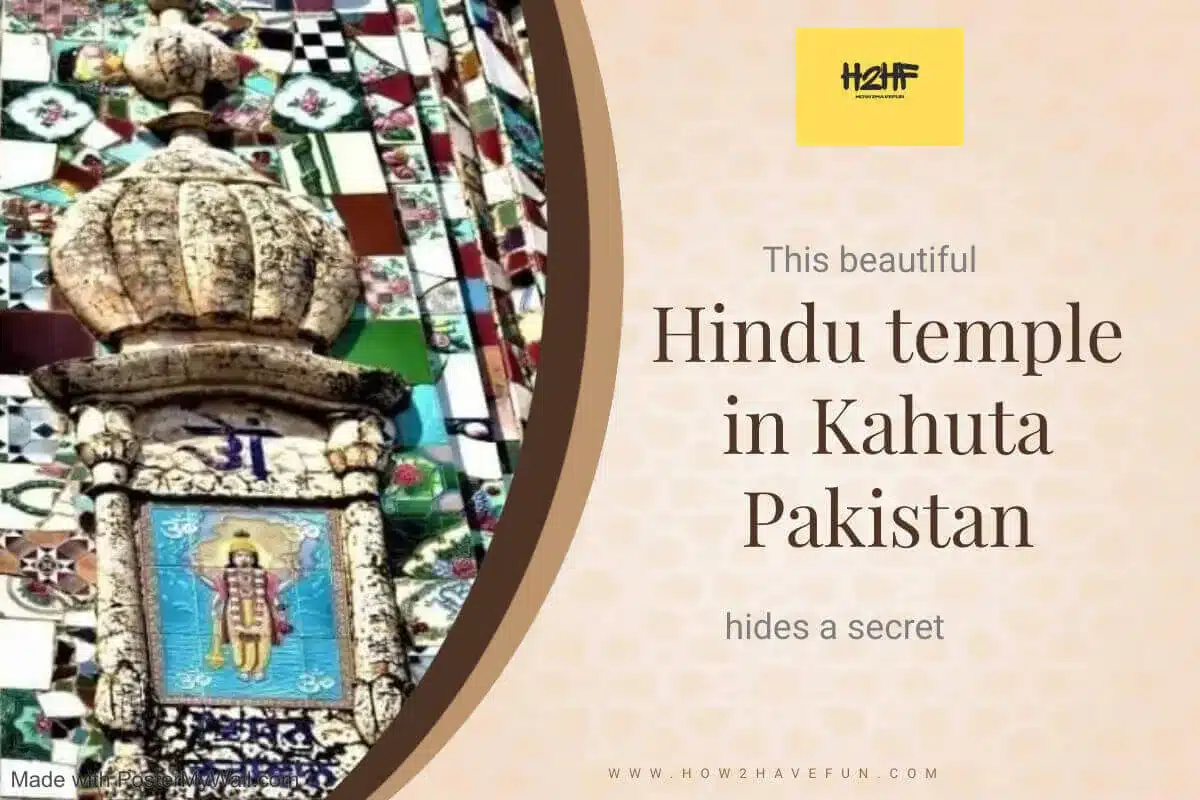
The surviving Hindu temple in Kahuta is a reminder of the town’s religiously diverse past and the communities displaced during the violence surrounding Partition in 1947. Its decorated interior and preserved religious imagery distinguish it from many abandoned temples around Rawalpindi.
This temple is included in our wider guide to 72 historic Hindu temples of Pakistan.
.jpg)
In 1947, Kahuta had a population of 3500, with half of them Muslims, all living along the main junction of the ring road that went into Kashmir and looped back at the same spot. The Hindus were of the Mahajan caste (patwari, tehsildar, merchants, etc.); Muslims were of the Rajput clan and Sikhs were in the administration.
.jpg)
Sikhs also lived around an adjacent town called the Thoa Khalsa, christened by ‘Bana’ a close confidante of Baba Guru Nanak.
Kahuta has vast fruit orchards (mangoes too), watering ponds, waterfalls, a vibrant town with Hindu temples, a gurudwara and a Jamia mosque.
.jpg)
At the end of March 1947, all that was left standing in the shouldering wreckage was the minaret and the obelisk of the Hindu temples — nothing else survived.
Sikhs’ were the magnanimous ruling class, building administrative centers, schools all around Kahuta. The British ended Sikh rule on Kahuta which was then part of Kashmir and handed it over to Rawalpindi district. As Rawalpindi was also directly administered by the British, Hindus gains ascendancy in Kahuta.
.jpg)
The same power structure was duplicated in other mixed communities with temples around Rawalpindi like Kurri Shehr, Lal Kurti, Kohati Bazar & Saddar Kabari Bazar & Purana Qila.
Several related sites are documented in our guide to the Hindu temples and Parsi cemeteries of Rawalpindi.
Muslims stayed the same, poorly educated, politically weak, and living in the surrounding mountains.
Kahuta and nearby Thoa Khalsa suffered devastating communal violence during Partition. According to an eyewitness account shared with us, extensive fires destroyed much of Kahuta’s town centre and left the temple spire among the few prominent structures still standing.
.jpg)
The precise casualty figures and sequence of events require verification through archival sources. What remains beyond dispute is that Hindu, Sikh and Muslim families were displaced and the area’s long-established social fabric was shattered.
.jpg)
Mountbatten personally came to visit after the killings. These violent deaths were the result of colonial divide and rule policies, sowing religious divide. I mean, how can you gift Kashmir – a Muslim majority state – to a Hindu Dogra?
Now, this temple is the prettiest of all the Hindu worship places I’ve visited around Pakistan. All its religious symbols are still intact. I wish someone would interpret them for me.
.jpg)
I guess the town folks had had enough of violence for the next hundred years — they left the temples alone.
Hate begets hate; there can be no peace till the healing takes place.
Although the architecture of Hindu temples in Pakistan like the ones in Karachi, Lahore, Rawalpindi, Sialkot, Multan are nothing like the grand temples in Dubai, UAE, Atlanta, Minnesota, Wisconsin, Florida, Omaha — they are older and revered. Just for your information, there are no Hindu temples in the Muslim holy land of Saudi Arabia. Take your pick of the Hindu temples near you.
If you are in Kahuta to see this temple, don’t forget to see the other Hindu temple, which is now home to a lovely Kashmiri family.
.jpg)
Today, the surviving temple offers a rare physical connection with Kahuta’s pre-Partition history. Its religious artwork deserves professional documentation, while any visit should respect the building’s present occupants, local sensitivities and current access rules.
Discover more heritage and historic places in Pakistan or continue through our Explore Pakistan guide.
Discover new places, ideas and stories from How 2 Have Fun — delivered occasionally to your inbox.
Subscribe →