Kot Fateh Khan, Attock: Temple, Haveli and Historic Places

Malik Ata

Kot Fateh Khan is a historic town in Attock District associated with the celebrated tent-pegging champion Malik Ata Muhammad Khan. Its surviving heritage includes an old haveli, mosque, fort compound, colonial-era bridge and the religious building known locally as Baba Than Singh Sahib Temple.

The town can form part of a wider Attock heritage journey covering Makhad Sharif, Hazro and the historic places of Attock Khurd.

Old Jamia Mosque

Other things to see at Kot Fateh Khan, Attock

Other interesting things to see there are

Advertisement
  • The colonial bridge
  • The century-old mosque,
  • The fort complex and
  • Prince Malik Ata Muhammad Khan’s Haveli mansion.
  • Tent Pegging Show during springtime
Fort Comples

Location of Kot Fateh Khan Attock

The town of Kot Fateh Khan is 78 km from Rawalpindi on the newly opened CPEC highway through the Hakla interchange.

Time to get to Kot Fateh Khan Attock

Overall, it takes 1.5 hours to get there from Rawalpindi on the Motorway.

Route to Kot Fateh Khan

Kot Fateh Khan is approximately 78 kilometres from Rawalpindi. Routes and motorway exits can change, so travellers should confirm current navigation before departure. Tent-pegging events are sometimes held during spring, but dates should be verified locally rather than assumed.

New CPEC motorway to DI Khan

Since the CPEC road toward DI Khan has been cut across new territory, the sun shines brighter and the fields look greener in spring.

Who was Malik Ata Muhammad Khan?

In 1941, Malik Atta Muhammad Khan was born in Pindi Ghaib, Attock District. Because his paternal grandfather, Sir Muhammad Nawaz Khan of Kot Fateh Khan, had no sons, Malik Atta became the heir apparent to Sardar Muhammad Nawaz Khan, owner of 84 villages. His father, Nawabzada Malik Yar Muhammad Khan, was a nephew of Malik Ameer Muhammed Khan, Nawab Kalabagh.

Malik Ata got married to the Daughter of Nawab of Kalabagh – quite the pedigree

Advertisement
Baba Than Singh Sahib Mandir

History of Kot Fateh Khan Attock

This family is said to be Gheba Rajput.

Attock district is home to a Rajput tribe. The three sons of Rai Shankar Punwar, Gheo, Saino, and Teno, are said to be the ancestors of the Gheba, Sial, and Tiwana tribes. According to the Sial and Tiwana, this group of Rajput tribes may be related to the Punwars, and it isn’t impossible. After the Sial and Tiwana, the Gheba are claimed to have made their way to Punjab and lived in the rugged hills of Fatehjang and Pindigheb in the Attock district.

What I saw at the town center Kot Fateh Khan

Since Kot Fateh Khan is a typical feudal control city, there is no proper bazar or schools or government building.

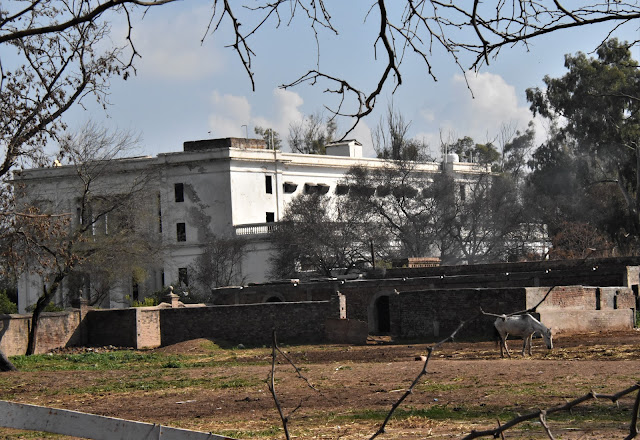
The town is still in the 1950s, with its narrow roads, dusty fields and a massive haveli a short distance from the town center.

Haveli

The caretaker of the haveli wouldn’t let us in the sprawling fruit gardens behind 50-foot walls, saying there were women in the compound.

It would’ve served these Maliks’ better if they had built quality local body offices and funded business instead of building a private paradise for their royal family

Old Haveli

Horse stables

The Horse stables adjacent to the haveli had several Pakistani and European breeds, but I couldn’t see the famed Arabian horse there, that is used for tent pegging.

I felt the urge to ride one of the beautiful horses at full gallop, but the stable guy there was not amused.

Compound

I tried talking my way into the compound, but the caretaker wouldn’t’ budge. 

I drove around the gated compound to find some enter space but had to turn back in disappointment.

While driving back, I saw a plaque installed by Lady Montagu Butler in 1917 inaugurating a “Jhallar.” For the life of me, I don’t know what that is. I assume it is a guest house, built by the Malik to keep the powerful British colonials happy

Sycophancy and worshiping the powerful higher in the food chain is how feudal survive anyway.

Foreigners visiting Kot Fateh Khan

Even now, the Maliks’ welcome foreign tourists to their Spring Tent pegging festival and have found space in the famed BBC traveler Michael Palin’s book “Himalaya.”

Malik Ata’s hard work won him mention in several of ISPR’s shows.

Colonial bridge

There were several dilapidated government buildings from colonial time that have come to disrepair. The bridge was the prettiest.

I then drove to the brick bridge, parked the car on top and walked to the reverse side, downstream.

From the looks of the pigeon hole design, red brick material, overgrown date palm tree, and cascading water slides below, this site was probably used as a recreation spot for Malik’s guest.

I sat in the shade of the thick jungle for a while and imagined how it would have been when the place was not that polluted.

Jamia Mosque

The next stop was the 140 years old town Jamia Masjid. As expected the hand-painted walls and designs were unique and beautiful to see.

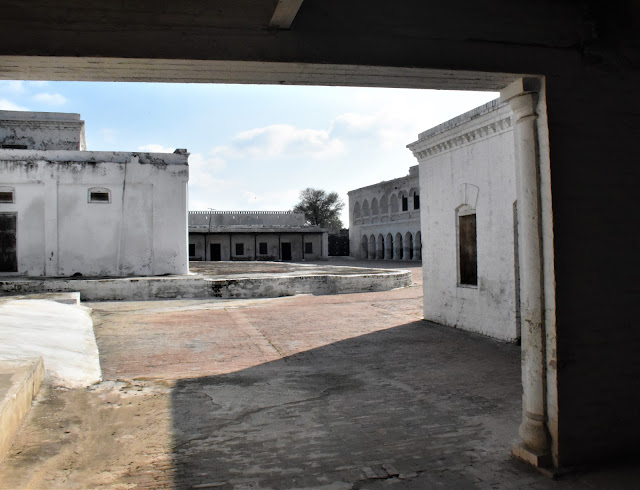
Fort

Adjacent to the Mosque is the old fort compound, complete with the jail they used to incarcerate trouble makers.

The British had given feudal in the Indus valley magistrate powers to jail anyone they thought violated their rules.

No one really comes to the fort compound anymore because the current owners don’t real re about history anyway.

I found the fort fascinating, especially the turban of the guards there that looked like Rajput warriors.

This is what the guard had to say about the Rajput Clan

 “Malik sahib had a dispute with some other influential in the area and they shot at me three times because I was defending the land. I got hit once and fell to the ground wincing and in pain. Malik Sahib came up to me and gave me a Rs 1000 prize for not letting my turban fall to the ground. This is the Rajput way”

I thought that was pretty stupid though.

Baba Than Singh Sahib Temple

The most intriguing heritage structure I found near Kot Fateh Khan stands on elevated ground outside the town centre. Its walls are deteriorating, and the associated water pond had dried up when I visited.

Local residents described it as a Khatri temple, although its name and architectural character may also suggest a Sikh association. Until documentary or archaeological evidence establishes its original identity, it is safest to describe it as a historic religious building known locally as Baba Than Singh Sahib Temple.

The site belongs within the broader story of Hindu temples in Pakistan and the country’s Sikh gurdwara heritage.

Where to have lunch?

I then tried finding a decent place to have a desi lunch but had to drive back for half an hour to get one.

Best time to Visit

The best time to visit Kot Fetah khan is during springtime March so that you can attend the Tent pegging festival that I missed.

Attock has several heritage sites along the Indus River because this was the first line of defense against the Pashtun and Persian warriors that routinely crossed over into India.

The Hindu Shahi needed people like Gheba Rajput to keep the local and the invaders under check.

Is Kot Fateh Khan worth visiting?

Kot Fateh Khan offers an unusual combination of rural architecture, equestrian history and neglected religious heritage. The Baba Than Singh Sahib building is especially valuable, but its original religious identity and history require further research.

Visitors should seek permission before approaching privately occupied buildings and should not enter unstable structures. The trip can be combined with Makhad Sharif, Hazro or Attock Khurd for a fuller exploration of Attock’s heritage.

Stay Curious

Discover new places, ideas and stories from How 2 Have Fun — delivered occasionally to your inbox.

Subscribe →