Five Forts, One Trail: A Tourism Plan for Pakistan’s Salt Range
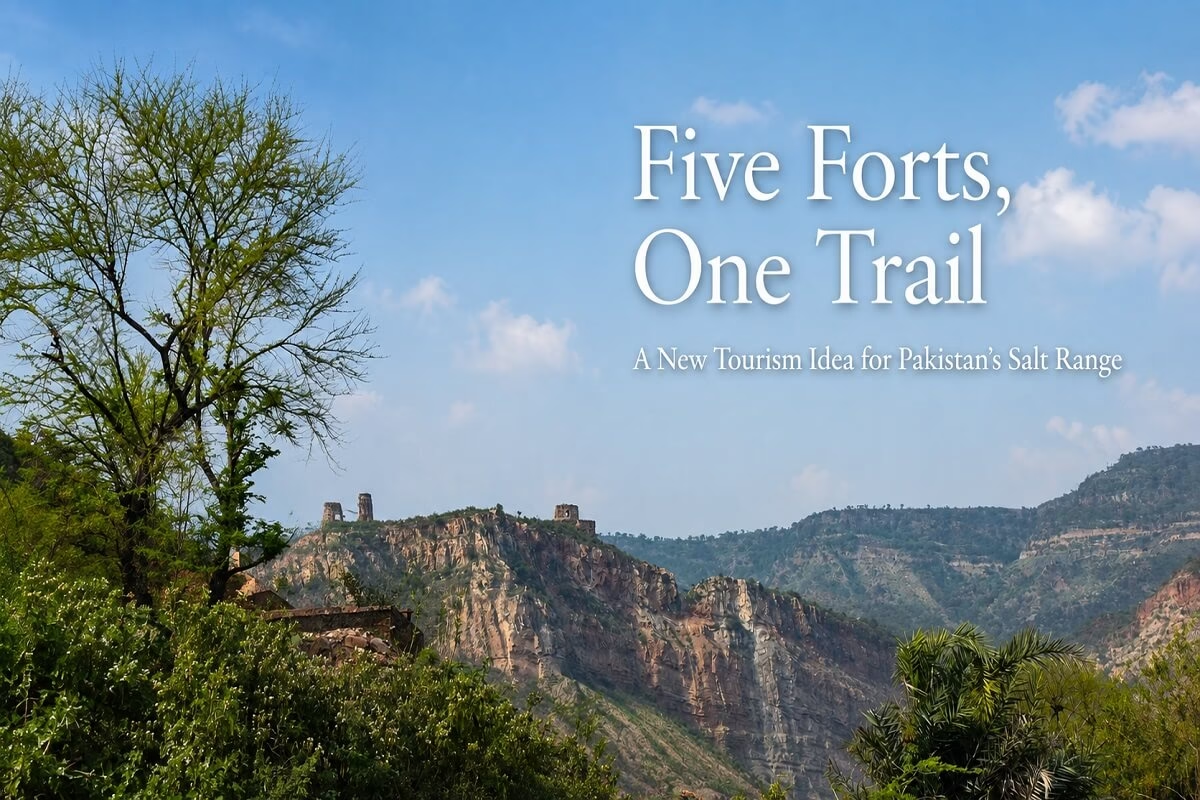
Between 2018 and 2020, I visited four historic fortifies sites across Punjab’s Salt range, Malot, Amb Sharif, Kusak and Nandna Fort. I also planned to visit Tulaja Fort, completing a trail of five forts, but couldn’t find reliable coordinates or single road sign leading towards it.
That failed attempt revealed the real problem with tourism in Pakistan. We have extraordinary places, but we often leave travellers to discover them by accident.
These five sites could be connected as one carefully mapped tourism trail – linking history, hiking, photogrsphy, local communities and the dramatic landscapes of the Salt Range.
A chain of forts overlooking Punjab
The five sites are scattered along the Salt Range, from the Soon Valley towards Jhelum. Their hilltop positions offer magnificent views over the Punjab plains. and reveal why fortified settlements were once essential for guarding valleys, roads and mountain passes.
.JPG)
View from Kusak Fort
Malot and Amb Sharif are more accurately described as fortified Hindu temple complexes, while Kusak, Nandana and Tulaja developed as hill forts or fortified settlements. together, they reflect different periods of Salt Range history and complement the larger story presented in our guide to historic forts of Pakistan.
Yet each gave ma a completely different travel experience.
.JPG)
Malot Fort
Malot Fort and Temple
At Malot Fort, the car took us almost to the site. The surviving temple’s deep red stone immediately stood out against the dry hills.
We combined the visit with Dharabi Dam, making it an easy and varied day trip combining heritage with landacpe.
.JPG)
Ama Sharif
At Amb Sharif , we drove through the wild landscape surrounding Sakesar. The ancient temple complex appeared suddenly among the rocks, almost from nowhere.
Because we stayed overnight at Sakesar, we could explore the valley without rushing. Visitors could combine Amb Sharif with several other places to visit in Soon Sakesar Valley, including Uchali lake and the Sakesar viewpoints.
.JPG)
Nandana Fort
Nandana Fort
Nandana Fort required a short but beautiful hike. The climb was not difficult, and on our return we followed another route through a ravine.
Nandana is especially important because of its association with the Hindu Shahi period and the scholar al- Biruni, who conducted his celebrated measurement of the Earth from this region during the early 11th century.
.JPG)
Kusak Fort
Kusak Fort
Kusak Fort could be seen from far away, sitting on an enormous rocky hill. The final climb was manageable, although entering through the damaged gateway required care.
From the tope, the landscape opened dramatically towards the Jhelum plains. The fort’s commanding position made its former defensive importance immediately understandable.
.JPG)
Nursing Phuwar Hindu Temple
The Tulaja Fort we could not find
Tulaja Fort was supposed to be our fifth destination. However, we found no road sign and could not locate dependable coordinates. It was extremely hot, so we abandoned the search and visited the nearby Nursing Phuwar Hindu Temple instead.
Even that temple had no road signs, despite its location being available online.
A historic site cannot become a practical tourist destination if visitors cannot reliably find the road leading to it.
Why not Create a Salt Range Fort Trail?
These places should not be promoted as isolated ruins. They could form a single Salt Range Fort and Temple Trail for history lovers, hikers, photographers and the university groups.
The proposed circuit could connect:
- Amb Sharif
- Tulaja
- Malot
- Kusak
- Nandana

Because of the distances involved, visitors should complete the trail through several day trips or as a three-to-five-day organised tour – not as one rushed journey.
The wider circuit could also include Sakesar, Uchahali Lake, Katas Raj, the Khewra Salt Mines, Dharabi Dam and traditional villages across the Soon and Kahoon valleys.
Different versions of the trail could be developed:
- A comfortable road tour for families and history lovers.
- A fort to fort hiking challenge for outdoor groups.
- A photography tour combining ruins, lakes and Salt Range Landscapes.
- A student archeology and history trail.
Each site could have a stamped “heritage Passport.” Visitors who complete all five could receive a Salt Range Trail cerrtificate.
It is a simple idea, but it could travelers a reason to stay longer , hire local services and visit more than one location.
.JPG)
View from Malot Fort
What must improve?
Pakistan does not need expensive resorts at these sites. Overdevelopment could destroy the very wilderness that makes them attractive..
The immediate needs are much simpler:
- Verified Google Maps locations
- Clear signs from the nearest main roads
- Marked walking trails with distance and difficulty levels
- Small parking areas and shaded resting points
- Clean toilets and drinking water at selected locations
- Historically accurate information boards in Urdu and Engliah
- Trained local guides
- Clearly displayed emergency contacts
- Protection from encroachment, vandalism and careless restoration
A QR code at every location could provide the site’s history, route map, old photographs and an audio guide. This would cost far less than constructing large tourist buildings.
Most importantly, local communities should benefit. Young residentscould be trained as guides, drivers and hiking assistants.
Tourism survives only when the surrounding community has genuine reason to protect the site.
Connect what Pakistan already has
in 2021, the government launched the Al-Biruni Radius heritage project at Nandana Fort, intending to connect several archeological attractions in the area. It was a promising beginning, but the wider Salt Range still lacks a clearly marked, bookable and publicly explained heritage circuit.
My journeys showed that these places already possess everything needed for meaningful tourism: history, architecture, hiking and commanding views over the Punjab plains.
What they lack is connection.
Pakistan does not always need to create new tourist attractions. Sometimes he better idea is to map, protect and connect the remarkable places that have been waiting for centuries.
Discover more heritage and historic places in Pakistan, or find your next journey through our Explore Pakistan guide.
Discover new places, ideas and stories from How 2 Have Fun — delivered occasionally to your inbox.
Subscribe →