Hindu Temples (Mandir) Lal Kurti Rawalpindi Pakistan
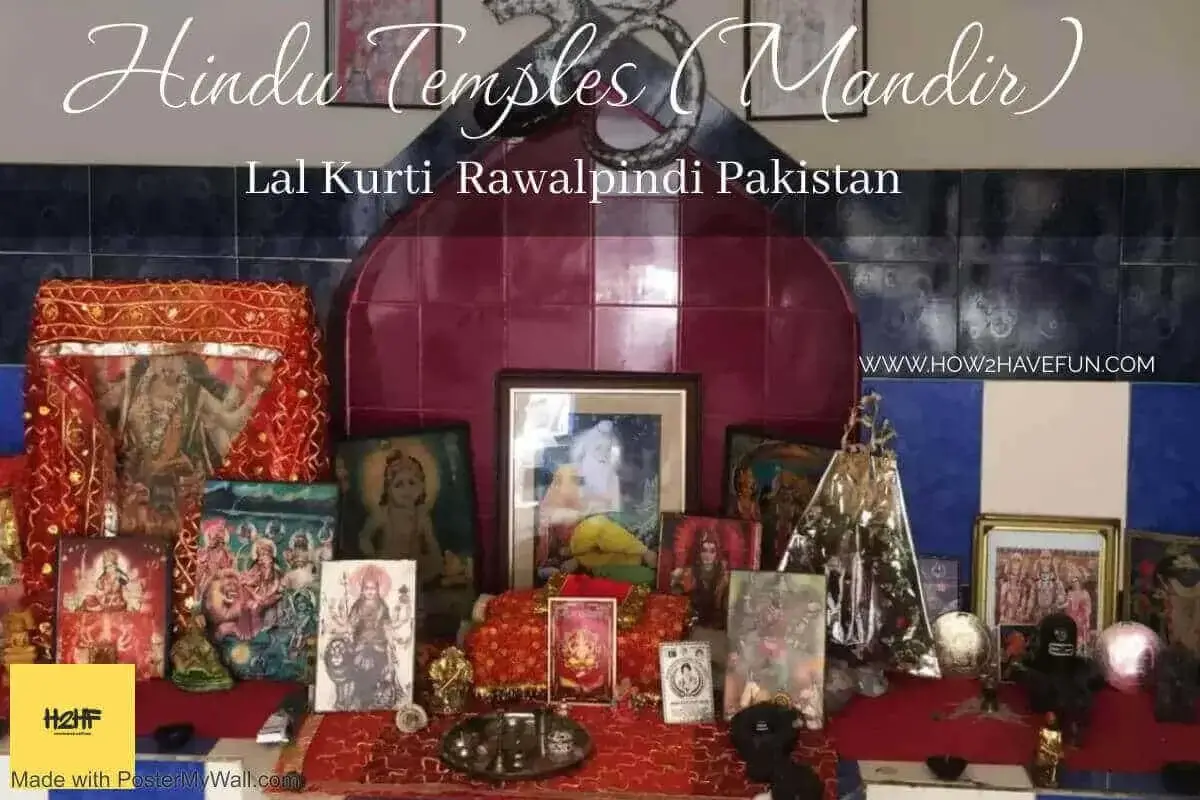
Lal Kurti is one of Rawalpindi’s older neighbourhoods and contains several buildings connected with its pre-Partition Hindu community. Its surviving temples, mansions and narrow streets offer glimpses of the area’s religious and colonial history.
These sites form part of our regional guide to Rawalpindi’s temples and historic cemeteries and our national collection of 72 historic Hindu temples of Pakistan.
First up is a disclaimer
Whatever I have written about Lal Kurti ( temples) in Rawalpindi city, is meant to be humorous and interesting—not meant to offend anyone. Enjoy!
Lal Kurti is 5 minutes from Saddar. We went there on the weekend to beat traffic. The map, location, pictures, and photos of Hindu temples in Lal Kurti town of Rawalpindi, Pakistan is pasted below for your reference.
.webp)
The best-preserved of the three temple structures stands within private property near Lal Kurti’s main square and is not generally open to visitors. Its courtyard also contains an old well and a mature banyan tree.
.jpg)
Local people tell me that both Hindus and Sikhs used to worship in the place during British times. This temple is in the courtyard of an old Hindu mansion. The place had a watering well and the sacred Banyan tree. I couldn’t see the inside of the temple as it was locked, but it looked well preserved. This temple was the safest site of religious festivals, under the direct protection of the British raj. Bhagat Kabeer was the chief patron of this temple, who has long vanished without a trace.
.jpg)
Behind this mansion is a dilapidated government missionary school that looks haunted.
.jpg)
The second Hindu temple is across the road inside the narrow lanes of Lal Kurti. For safety, as expected, the Hindu residents tried to live inside closed communities in these narrow lanes. There being well-off is reflected in the elaborate mansions they lived in with balconies, expensive entrances, and brilliant facades
.jpg)
I absolutely love the geometric tiles in old Hindu mansions. These are nowhere to be found anymore. The third site is associated with Rawalpindi’s Valmiki Hindu community. Its simple interior, religious images and absence of a prominent spire distinguish it from the more ornate temples nearby.
.jpg)
Chief Patron of this community was Mr. Khera Mal, who decided to stay back after partition and encouraged his community to do so too. The man passed away but his family still resides in their huge home in Lal Kurti.
.jpg)
Disciples from all religions would frequent this temple chanting ‘bala shah noori tenu deve khand de choori’ [bala shah noori (the nick of Guru Valmik) will give you choori made of sugar].Continue exploring the Krishna Mandir in Saddar, Kalyan Das Temple and Rawal Dam Temple.
.jpg)
Lal Kurti was a town on the edge of Cantonment where white British were allowed to consort with the local crowd. This town was therefore a melting pot of ‘skilled’ workers of all religions, that were allowed to serve the British units stationed there. Lal Kurti’s original name was British Infantry Bazar and it served 1500-2000 British infantry troops stationed close by. Their overcoat was red, so it was called ‘Laal’.
.jpg)
That wasn’t the only purpose of Lal Kurti. All the Indian staff that was required to work with the white colonials lived in the area in order to avoid the hassle of going through check posts. Even Mall road had a separate lane for Indians.
Lal Kurti also had the entertainers here, the artisans, the tailors, etc.
.jpg) A huge massacre did take place in Lal Kurti as well, post-partition. The dead were buried in large landfills.
A huge massacre did take place in Lal Kurti as well, post-partition. The dead were buried in large landfills.
Behind Lal Kurti, the congested bazar is a well-planned residential area. British leased out the land to rich and influential people who required their protection.
Bismillah Sar’aa was a resting place for wary travellers in Lal Kurti. It was a mixed community of all religions. The main gate leads to a wide courtyard with brick line floor and ornate buildings. A clear water stream passed through it once.
.jpg)
We wound up this tour by getting nihari, halwa poori from ‘billu paye’. His nihaari was Zabardast!
Lal Kurti’s surviving temples and old houses deserve careful documentation as part of Rawalpindi’s urban heritage. Because some buildings are occupied or privately owned, visitors should view them respectfully and never enter without permission.
Nearby heritage can be explored through the Hindu temple in Kahuta and our guide to the best things to do in Rawalpindi. Discover more heritage and historic places in Pakistan.
Discover new places, ideas and stories from How 2 Have Fun — delivered occasionally to your inbox.
Subscribe →