Hazir Pir Shrine Trail: Margalla Pass Hiking Guide

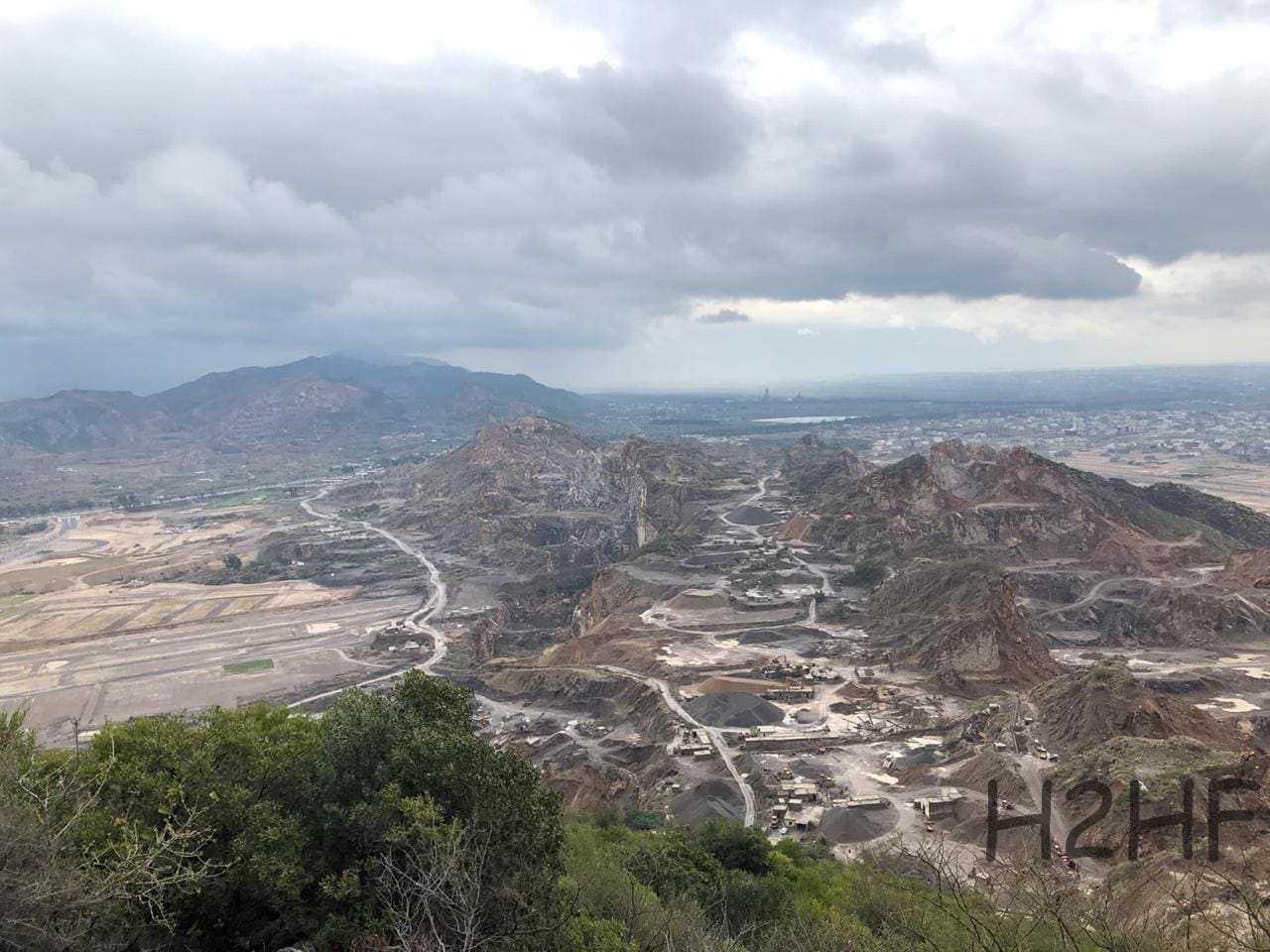
Hazir Pir Shrine stands on a high ridge near Margalla Pass, west of Islamabad and close to the historic route connecting Rawalpindi with Taxila. The site offers wide views across the surrounding hills and towards parts of Islamabad, Rawalpindi and the Taxila region.
During our visit, we approached the ridge from the Faisal Town side and completed the final section on foot. The journey passed close to quarrying areas and involved an uneven dirt track.
This is not one of Islamabad’s formally maintained numbered trails. Access, road conditions, quarry activity and permission to enter particular tracks may have changed since our visit.
Table of Contents
ToggleHazir Pir Trail at a glance
- General area: Margalla Pass near the Rawalpindi–Taxila side
- Destination: Hazir Pir Shrine
- Route type: Dirt road and uphill walking
- Walking time during our visit: Approximately 25 minutes each way
- Difficulty: Moderate, depending on road conditions
- Facilities: Limited
- Principal concern: Quarry traffic and uncertain access
- Best approach: Daylight visit after confirming the route locally
Where is Hazir Pir Shrine?
Hazir Pir Shrine is situated on the Margalla Pass side of the hills, several kilometres from Nicholson’s Monument. During our visit, the shrine was visible from lower ground after rainfall had cleared the haze.
We approached from the Faisal Town side and followed an unpaved road until the track became too rough for our car. From there, we walked uphill.
These directions should be treated as a description of our journey—not as current turn-by-turn navigation. New construction, private property and active quarry operations may have altered the route. Confirm access locally before leaving the main road.
Important quarry-safety warning
The approach described in this article passed close to stone quarries. Active quarry sites can involve blasting, unstable rock faces, deep excavations, heavy machinery and fast-moving trucks.
Do not enter an active quarry, park beside machinery or cross a barrier without explicit permission. Never approach quarry pools: their sides can be unstable, their depth may be unknown and the water may be contaminated.
If quarrying is underway or access is questioned by workers or security staff, turn back and choose another destination.
The historic route through Margalla Pass
Near Nicholson’s Monument, we saw a carefully aligned stone track that appeared to follow an older route around the end of the Margalla Hills.
Mughal-era accounts and inscriptions have been associated with road construction and repair in the wider Margalla Pass area. However, this article should not identify the visible stones as the sole surviving ancient Grand Trunk Road—or state that Akbar’s elephants used this precise section—without an authoritative archaeological source.
The surviving alignment is nevertheless worth documenting because the pass has long connected the Punjab plains with Taxila and regions farther northwest.
Hazir Pir Shrine
After walking uphill for approximately 25 minutes, we reached the shrine. Its exterior was modest, while the interior contained colourful decorative glasswork commonly found at shrines in the region.
A local caretaker told us that Hazir Pir was regarded as a disciple of Bari Imam. This should be presented as local oral or devotional tradition unless confirmed through a reliable historical record.
Visitors should dress respectfully, remove shoes where required and ask permission before photographing caretakers, devotees or the shrine’s interior.
Readers interested in Islamabad’s wider Sufi heritage can visit our guide to Bari Imam Shrine.
The ridge’s commanding view makes its location visually striking, but I found no reliable evidence that the shrine served as a formal Mughal lookout or intelligence post. That interpretation should remain speculation rather than history.
When the road became too rough, we stopped driving and continued on foot. Visitors should leave vehicles only in a legal and reasonably secure location after obtaining permission from the landowner or responsible local authority.
Who can visit?
Suitability depends on current access, fitness, terrain and quarry activity—not gender.
Because the area is isolated and not maintained as a formal public trail, visitors should travel in a group during daylight. Carrying a weapon is not responsible general hiking advice. If personal security or access appears uncertain, do not proceed.
Visiting responsibly
Respect the shrine as a living religious site and the surrounding land as a working rural and industrial landscape.
Do not enter quarry property, photograph workers without permission, damage rock formations, leave rubbish or light fires. Avoid loud music near the shrine and do not interfere with devotional activity.
For an established heritage destination on the Islamabad side of the hills, visit the Shah Allah Ditta Caves.
Find more walking and nature experiences in our guide to the best outdoor activities in Islamabad.
First-time visitors can plan the rest of their trip with our guide to the best things to do in Islamabad.
Is Hazir Pir Shrine worth visiting?
Hazir Pir Shrine offers an unusual combination of spiritual heritage, broad views and proximity to the historic Margalla Pass. Its relative obscurity gives the journey interest, but the approach is less predictable than Islamabad’s established visitor sites.
Visit only after confirming access, remain clear of quarry operations and travel during daylight with companions. The shrine and surrounding views are worth experiencing, but no photograph or viewpoint justifies entering unsafe or restricted ground.
Discover new places, ideas and stories from How 2 Have Fun — delivered occasionally to your inbox.
Subscribe →