Giri Archaeological Complex, Taxila: Buddhist Monasteries and Fort
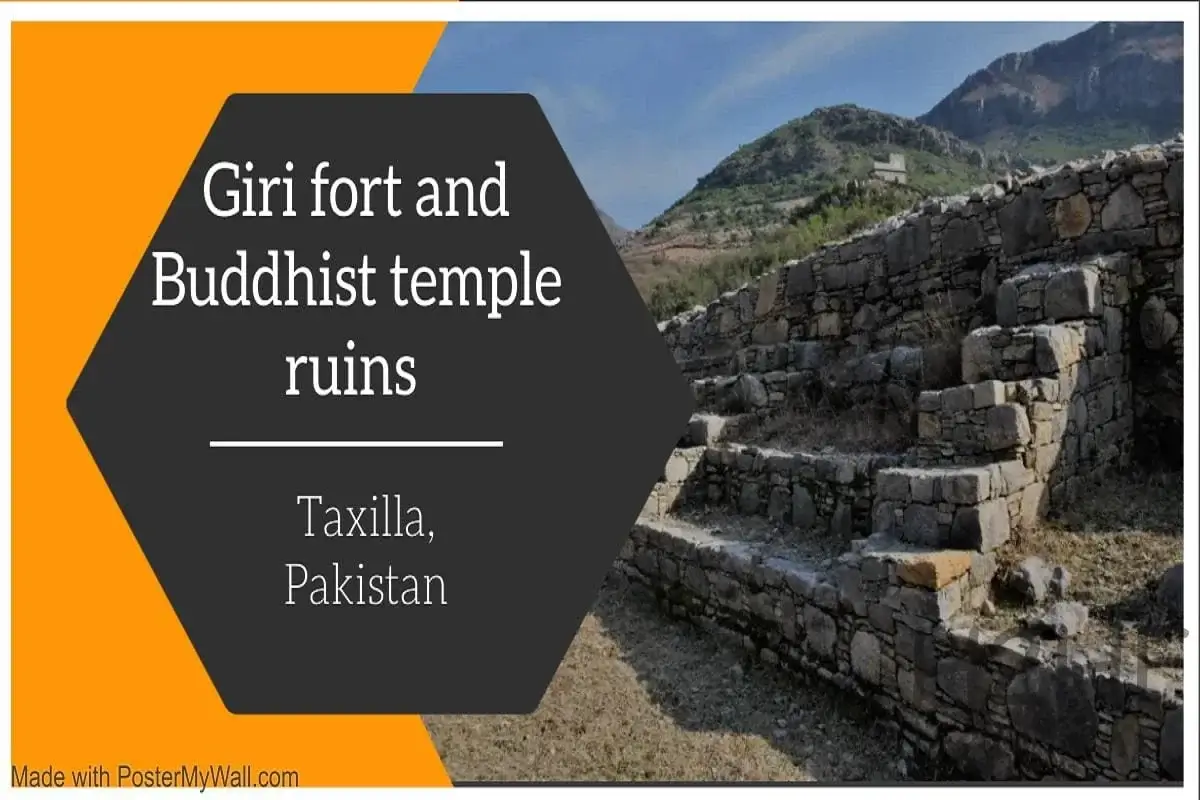
Hidden among the hills near Taxila, the Giri Archaeological Complex contains the remains of Buddhist monasteries and stupas alongside later Islamic structures. Giri forms part of the wider Taxila UNESCO World Heritage Site, which includes ancient settlements, monasteries and religious monuments from different historical periods.
Reaching Giri is more difficult than visiting Taxila’s better-known sites, but the quiet landscape and scattered ruins make it an interesting destination for travellers interested in archaeology and Buddhist heritage. During my visit, I explored two principal archaeological areas surrounded by hills, water channels and fruit farms.
History of Giri Fort and Buddhist temple
Giri is one of the Buddhist monastic sites included within the UNESCO-listed Taxila archaeological complex. The surviving remains include Buddhist monasteries and stupas representing the period when the Taxila Valley was an important religious and educational centre.
The complex also contains the remains of a medieval three-domed mosque, a ziarat or tomb, and a madrassa. These structures show that the area continued to hold religious importance long after the Buddhist establishments had declined
Another related archaeological location in this landscape is Ban Faqiran Stupa, although visitors should confirm the route and local access conditions before attempting the journey.
Giri is one part of Taxila’s much larger archaeological landscape. Travellers can compare its secluded ruins with the better-preserved monastery at Jaulian, the monastic complex at Mohra Moradu, and the monumental Dharmarajika Stupa. The ancient streets and religious buildings of Sirkap reveal another side of historic Taxila.
Buddhism temple restoration
It is because of this link that the Japanese Buddhist sangha has been restoring ruined temple sites all across India and Sri Lanka.
Pakistan has yet to invite them to restore these beautiful temple sites for reasons only known to the brilliant minds that rule us.
How to get to Giri Fort and the Buddhist temple site?
Giri is less accessible than the principal archaeological sites near Taxila Museum. The final approach may involve an uneven track or streambed and may not be suitable for an ordinary car.
Road and trail conditions can change after rain, so confirm the current route locally before leaving Taxila. Avoid attempting the approach during rain or flash-flood conditions. A high-clearance vehicle and a local guide may be helpful, while solo hiking on an unfamiliar route is not recommended.
Carry drinking water and food because visitor facilities near the ruins are limited. Do not rely solely on old online directions or an unverified map pin.
Where can you have lunch at the Giri site?
There are no restaurants of quality at the Giri Taxila site so take your food with you.
The only Ok, restaurant at Taxila, is in front of the museum and that too has average food.
Might as well eat from the roadside driver hotel on the GT road instead.
Time to reach Giri Fort and Buddhist temple
It took me 2 hours to get to the Giri fort and Buddhist temple ruins because I had tried to get to the Kunala stupa site first.
Kunala temple site requires a hike of about half-hour to get there and I didn’t have my dagger with me.
Later, the history of Giri Fort and Temple
Giri Fort and Buddhist temple ruins have a great history. Masud, Mahmood Ghaznavi’s errant son was assassinated here by his nephew, Ahmad (son of Muhammad). Like all power-hungry Mughal, there was intense fighting for the throne amongst his successors.
Giri site was still intact in 1040 when Masud was overthrown, incarcerated, and killed here.
What to see at Giri
The archaeological landscape includes:
- Remains of Buddhist monasteries and stupas
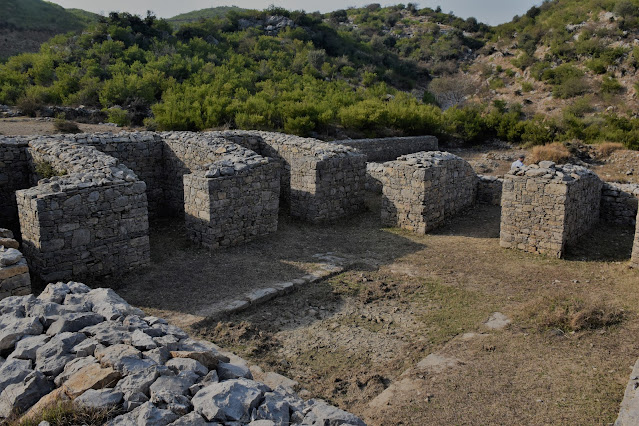
- Surviving walls, rooms and stone foundations
- Later Islamic religious structures
- Springs, ponds and water channels
- Views of the surrounding hills and agricultural landscape
Some features are fragmentary and may be difficult to interpret without archaeological information or a knowledgeable guide. Visitors should avoid climbing on walls, moving stones or entering restricted areas.
What I saw at Giri archeological site
The drive through the loquat fruit farm was delightful and then a bifurcation appears. One leads to one monastery complex and the other branch to the other on a higher plateau.
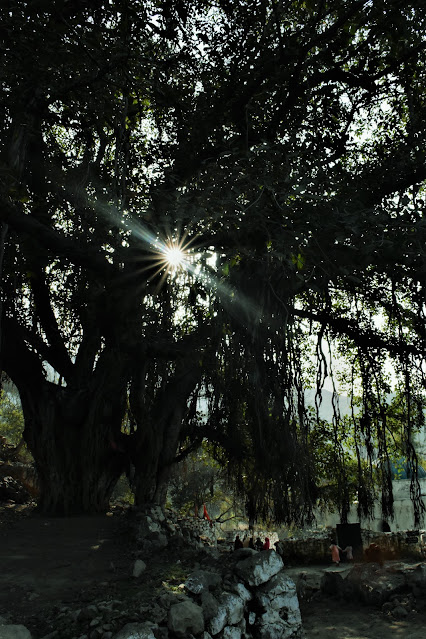
Giri Site Number 1
The monastery walls, the lotus ablution pond, and dormitories have been excavated and restored somewhat but the stupa is mostly destroyed and has not been excavated yet.
The whole site has been encroached on by shrines and landowners.
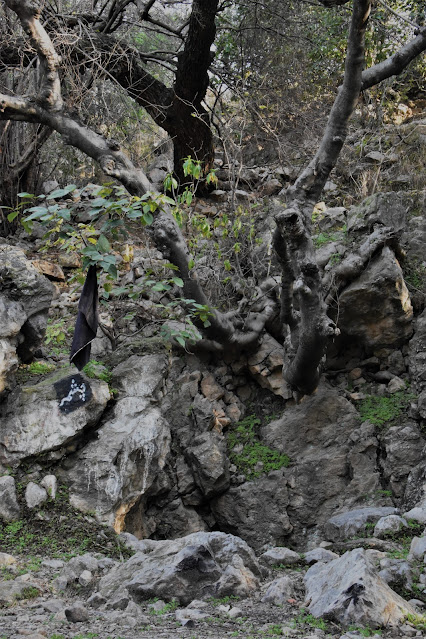
Walking back to site number two, I saw a natural freshwater stream pouring into a crystal clear pond, which had religious value for the devotees back in the day. There is even a hole carved into the rock wall through which you can see water gushing forth.
Giri Site Number 2
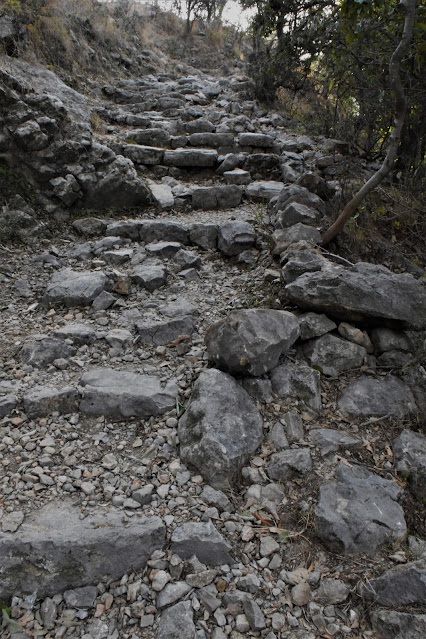
Walking through the descript shrine, you will have to climb about 50 flights of stone stairs to reach the Giri fort and Buddhist temple ruins number two.
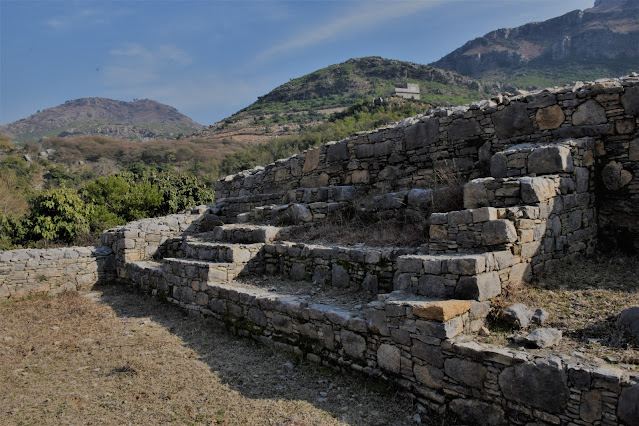
Like site number one, this place has been somewhat restored with the building material that was still available not used to construct abutments for the fruit farms close.
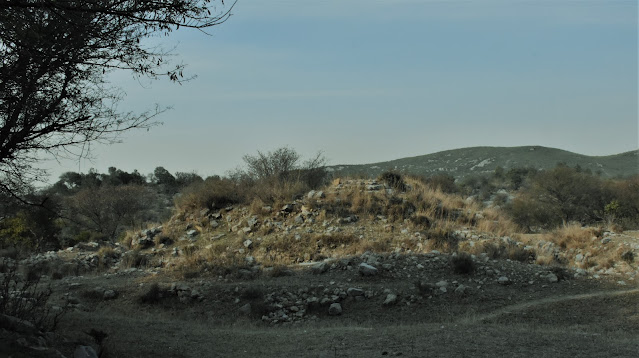
The stupa is destroyed and not much is left to excavate.
The view from this site is pleasant the atmosphere is peaceful.
The best time to visit Giri Fort and the Buddhist temple site
The best time to visit Giri fort and Buddhist temple is during springtime and early summers as it gets scalding in June, July.
Transport for Giri site
You can take a motorcycle, a 4×4, or hike to the Giri fort and Buddhist temple ruins site, but not a car.
Is Giri worth visiting?
Giri is worth considering for experienced heritage travellers who have already visited Taxila’s more accessible archaeological sites. Its appeal lies in its secluded setting, layered religious history and relationship with the wider Taxila landscape.
However, this is not a developed picnic destination. Access can be difficult, facilities are limited and conditions may change. Visit responsibly, confirm the route beforehand, respect nearby communities and farmland, and leave every archaeological feature exactly as you found it.
Discover new places, ideas and stories from How 2 Have Fun — delivered occasionally to your inbox.
Subscribe →