Historic Places and Temples of Attock Khurd, Pakistan

Attock Khurd stands beside one of the most strategically important crossings of the Indus River. Its fort, railway bridge, temples, colonial buildings and neighbouring historic towns preserve evidence of the travellers, armies and communities that passed through this region.
The temples documented here form part of our national guide to 72 historic Hindu temples of Pakistan.
In BC times, Alexander used the bridge crossing was further North at a place called Hund.
What is the old name of Attock?
The original name of Attock was the same and it means “obstacle”. The colonial British renamed Attock as Campbellpur, but was reverted to its original name after Pakistan’s independence in 1947.
Which Province is Attock Pakistan located?
Attock is the northwesternmost district of Punjab, situated beside the Indus River and the boundary with Khyber Pakhtunkhwa.
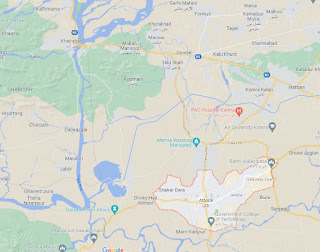
Route Map of Attock Pakistan
It takes mere 1.5 hours to get to Attock from Islamabad on the motorway and 6 hours from Lahore.
Which Language do people of Attock speak?
The people of Attock are bilingual in Punjabi and Pushto.
There are several historical towns dotted across Attock which have now turned into ghost towns, because Attock Pakistan lost its strategic significance.
However, the historical and archaeological importance of Attock Pakistan remains.
What is Attock Pakistan Famous For?
Attock once was famous for its culture and multilingual – multi-faith society.
These are the things worth seeing in Attock Pakistan:-
- Attock Khurd Hindu Temples
- Attock Fort overlooking the Indus
- Attock Railway Bridge
- Makhad Sharif historic town
- Kot Fateh Khan and it’s Temple
- Ghazi Barotha Power House Attock
- PAF Base Kamra, Attock
- Hindu Temples of Hazro Town Attock
Attock Khurd
Attock Khurd, or ‘small Attock’, is the town straddling the ancient trade route between India and Afghanistan. This town also supported the Indus River crossing and guard posts that emperors from Buddhist Asoka (268-232 BCE) to Muslim Akbar (1583) have erected at the site.
History suggests that Attock Khurd was mostly inhabited by boat people from the bank of Ganges to facilitate river crossing.
.JPG)
.JPG)

Behram ke Baradari Attock Khurd
Behram Ke Baradari (1501-1561), Begum ke Sarai (1539-1612) and Tomb of the unknown dancer are all located within a few hundred meters of each other. Considering this was the North Western most tip of the Indian kingdom, sarais (rest houses) and baradari were expected to be there..JPG)
Bairam Khan was Akbar’s chief General and Salima Sultan Begum was his wife. Begum went on to become the fourth wife of Akbar himself. Behram’s baradari is the most well preserved and still looks luxurious. It was probably a 5-star accommodation of yesteryear.
 Hindu Temples of Attock Khurd
.JPG) Hindu Temples of Attock Khurd
Hindu Temples of Attock KhurdTwo historic Hindu temple structures survive within old Attock Khurd. Their elevated positions and remaining architectural details offer evidence of the town’s pre-Partition Hindu community.
The buildings stand among occupied neighbourhoods, so visitors should respect residents’ privacy and avoid entering private property without permission.
These temples were perched on top of stone hills that are no more that tall as the highway has come up close. These locals deserve appreciation for preserving heritage of their town, despite grinding poverty all around.
.JPG)

Attock Old Metal Railway Bridge
Driving a further 10 kilometers we reach the old Attock Rail / Vehicle Bridge over Indus. This bridge was erected in 1883 and renovated in 1929. This bridge is like a fort with metal rods slung over the raging river.
It’s more of a tourist attraction now..JPG)
Khairabad Fort
Across the bridge is Khairabad town, frozen in time like a century before where the British recruited Khattak soldierss for their Pathan Regiments. It makes sense. If you can’t beat them, recruit em!
Kartoos Memorial of fallen Indian Soldiers in World War
Several thousand were sent to fight the world war for the British from here and they have a ‘kartoos memorial’ (Cartridge) for the fallen No. 40 Pathan regiment. I wish Pakistan would change course and produce more brains than cannon fodder for elites.
Attock Railways Station
.JPG) Attock Railways Station
Attock Railways StationLastly, is the colonial Attock Khurd Railways station building that doubles up as a guest house. Mesmerizing landscapes, tasteful architecture, lovely weather and friendly Railway staff greets you as you enter the place.
History of this station says that the british had envisioned it to be fishing / hunting rest house. Pakistan Railway trains do not stop here anymore.
Unfortunately, I couldn’t go to the Attock Khurd police station.

Discover new places, ideas and stories from How 2 Have Fun — delivered occasionally to your inbox.
Subscribe →